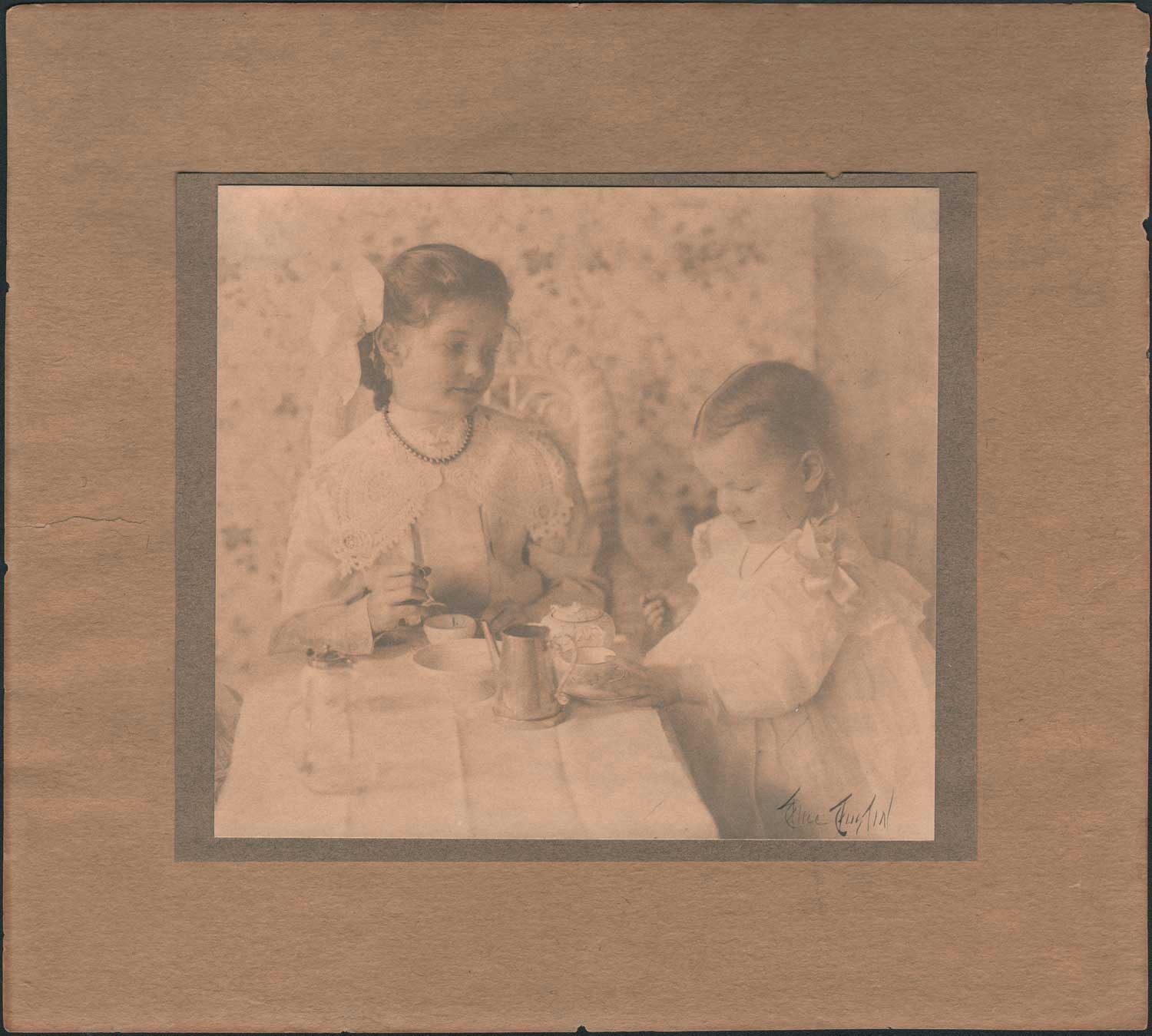
Two for Tea
Two children enjoy playing tea while seated at a small table.
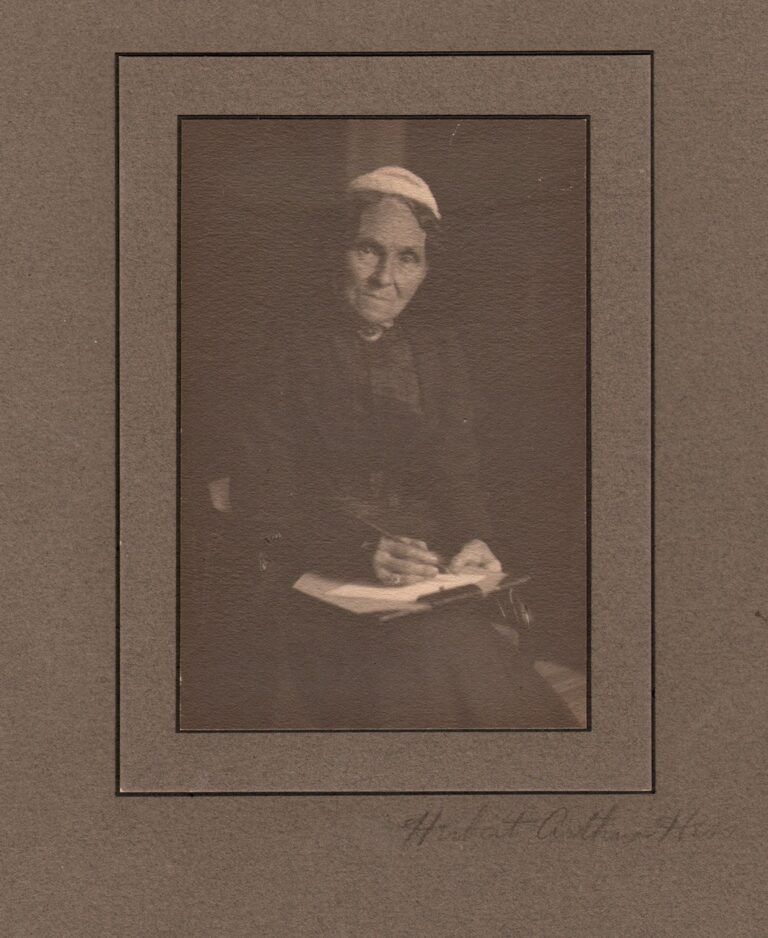
Alice Austin: 1862-1933
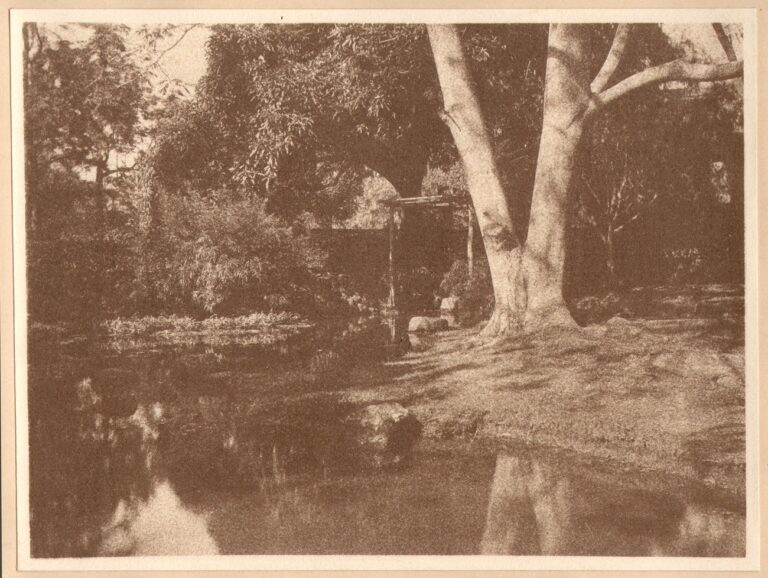
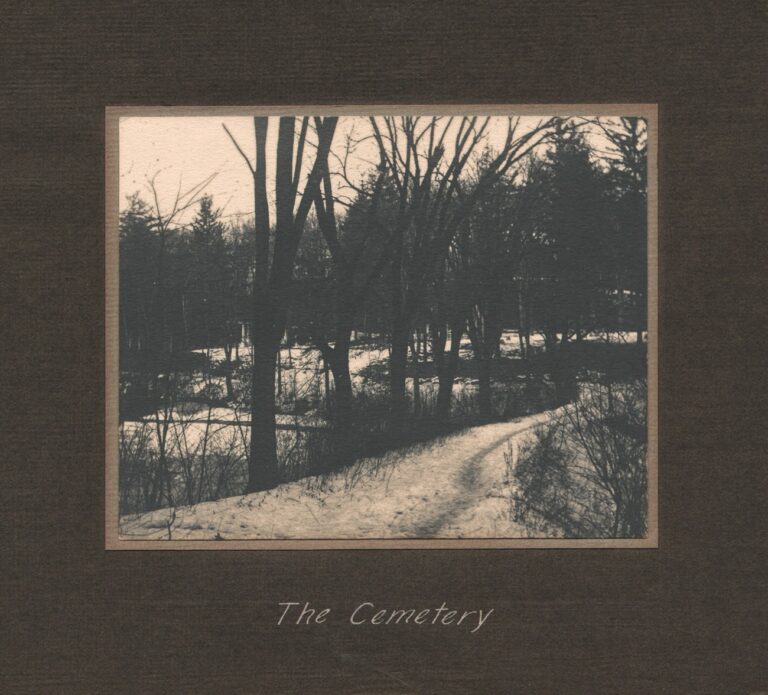
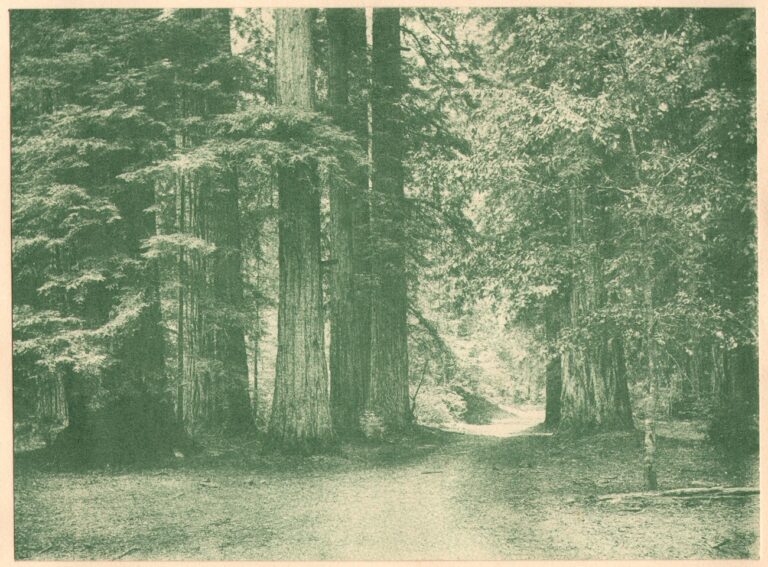
“Boston pictorialist photographer Alice Austin was also a sculptor who, early in her life, moved from Maine to Minnesota with her family. Her father, Horace Austin, later became governor of that state in the 1870s. She studied painting at the Massachusetts Normal School, the School of the Museum of Fine Arts, and the Pratt Institute in New York with Arthur Dow. After graduation, she became the supervisor of drawing in the Brooklyn public schools and soon developed an interest in photography. In Brooklyn, she worked as a dark room assistant to Gertrude Kasebier, who opened her eyes to the potential of photography. By 1900, Austin had moved to Boston where she opened a studio and became a member of the Society of Arts and Crafts. She exhibited her photographs widely and also took sculpture classes at the Copley Society.” (1.)
In her article: Selling Pictorialist Photography as Craft: Alice Austin’s Artistic Production and Role in the Boston Society of Arts and Crafts between 1900 and 1933, author Caroline M. Riley has penned the definitive biography of this important photographer. From the Abstract:
“Alice Austin (1862–1933) worked as a professional photographer in Boston from 1900 until 1933. She joined Alfred Stieglitz’s Photo-Secessionists group in 1905 and worked as a committee member at the Boston Society of Arts and Crafts for approximately thirty years. This article considers how Austin’s professional persona reflects the larger intersection of craft, gender, and photography in Boston during the first quarter of the twentieth century. In her capacity as artist and committee member, Austin emphasized craftsmanship—a concept that embodied both the handicraft tradition, in which it was permissible for women to take part, and Pictorialist fine art photography. The implication of this flexibility was profound for women such as Austin who were able to become professional photographers by aligning their artistic production with the larger handicraft tradition, thus placing photography within the domain of women’s work. Austin continued to argue for the intersection of craft and photography as a founding member of the Photography Guild at the Boston Society of Arts and Crafts after Pictorialist photography became outmoded with the rise of straight photography. Austin’s work was shown in at least thirteen exhibitions, including famed photographer Frances Benjamin Johnston’s show on women artists at the 1900 Parisian Exposition Universelle. Austin was also referenced in at least twenty-one different photographic journals and twenty-five newspaper articles and popular publications during her lifetime. Yet despite her successful career and her significant contributions to the development of photography and craft, Austin’s work has been overlooked by scholars.” (2.)
- Excerpt: Erica E. Hirshler: A Studio of Her Own: Women Artists in Boston 1870-1940. Boston: MFA Publications, 2001. p. 174
- Caroline M. Riley: Selling Pictorialist Photography as Craft: Alice Austin’s Artistic Production and Role in the Boston Society of Arts and Crafts between 1900 and 1933. The Journal of Modern Craft Volume 8—Issue 3 November 2015. Austin was a founding member of the Photography Guild at the Boston Society of Arts and Crafts. This organization still exists today, as the Society of Arts + Crafts in Boston.