Blackshore, River Blythe {Suffolk}
From Chapter XVI: Blackshore
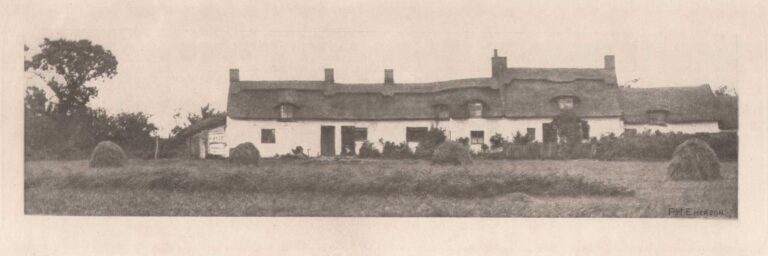
“A FEW cottages clustering round a small tavern, “The Fishing-Buss,” whose name bespeaks its history, a cow-house, a quay in places decayed, a couple of condemned smacks’ hulls lying alongside the quay or drawn up on the land, and occasionally a weather-worn “billy-boy” moored to the quay— this is Blackshore on the River Blythe—Blackshore, of which we read that once spacious warehouses were erected on its wharf “for the stowage of nets and other stores, one room of which is capable of holding a thousand tons of salt;” that a dock was made there in 1783, and that in the same year twenty fishing-busses met there for the white-herring fishery. It seems this quay was made in James the First’s reign, and must have been the scene of busy life when Dunwich, Walberswick, and Southwold were flourishing with their fisheries: but as the greater places fell to nothingness, so has this little place proportionately fallen into utter decay, though perhaps we are not strictly correct in this statement, for the last time we saw Blackshore it was again in the hands of the builder-two cottages were being run up.
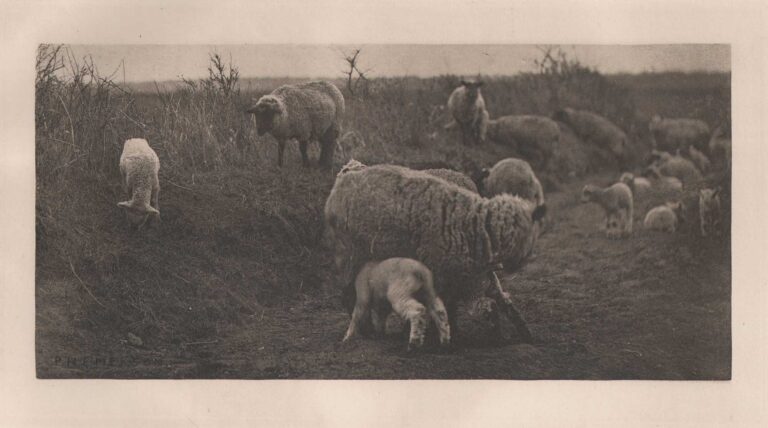
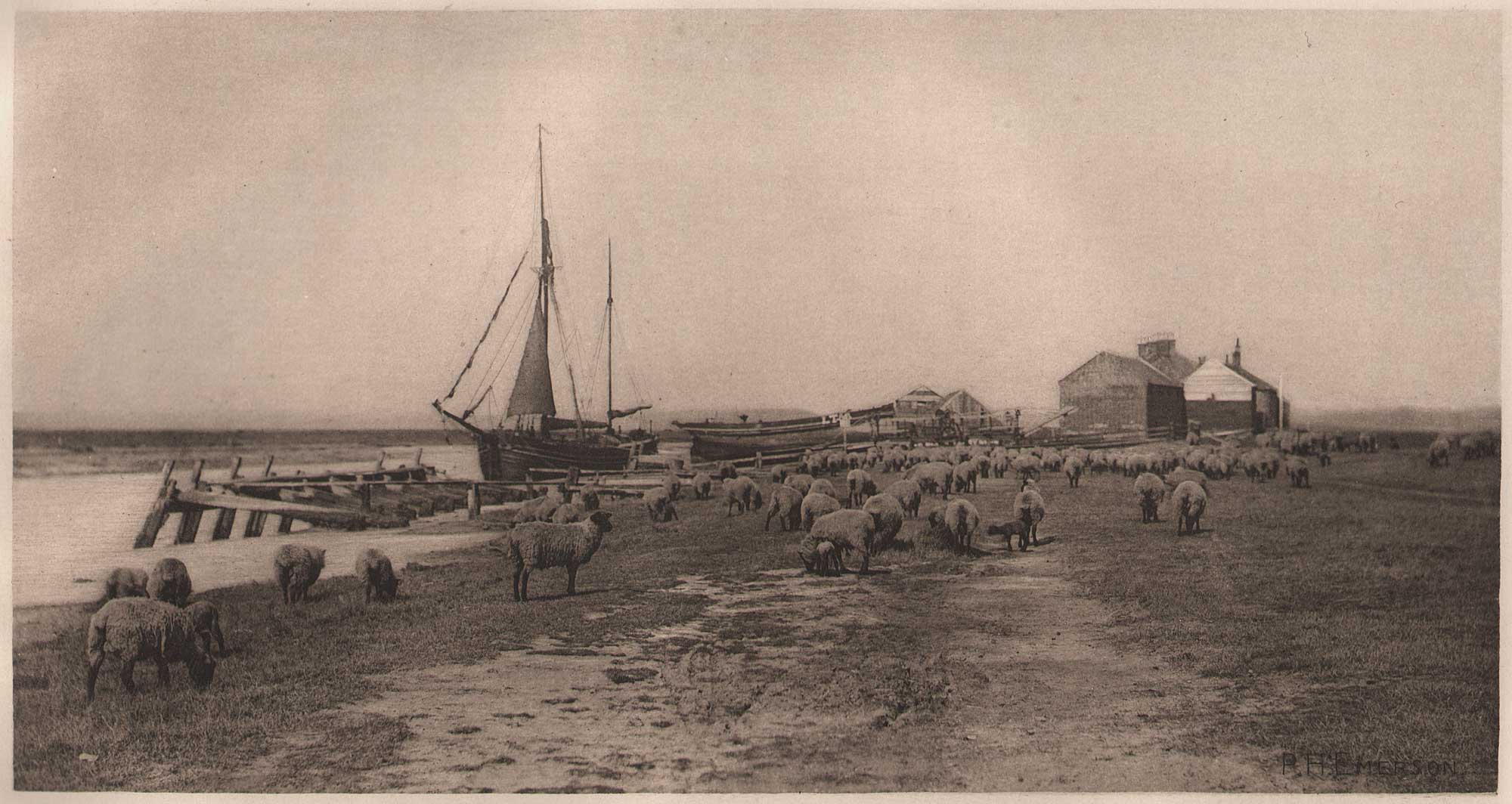
Our plate shows the hamlet as seen from the cansey leading to the ferry between Southwold and Walberswick, and in the picture can be seen the newly-made horse-ferry, standing where it was left for weeks before it was launched in the muddy Blythe. Some sheep are feeding along the cansey, as is their wont in early spring, the shepherd following them. At the old decayed quay is moored the schooner “Heart of Oak,” well known to Southwold and Walberswick fishermen, for in her more than one of them have sailed along the coast, and some we know have nearly met their deaths on her; but the sturdy vessel survived, and now she floats at Blackshore quay condemned as unseaworthy. Close by is a creek called Buss Creek, because an old Dutch buss was dug up there many years ago. The adventurous Dutchmen, it is said, used to arrive at Blackshore with herrings before the English herring-fisheries were established; here they delivered their herrings, and then fished for sparling (smelts).
An old lady, who lived eleven years of her most romantic life at Blackshore, told us that until the building of the railway, this little hamlet had quite a large trade of its own. She has herself often seen as many as six “billy-boys,” two or three wherries and Rochester barges, besides fishing-boats, lying in the river at one time. The vessels delivered coal, timber, cake and “clay rubbish” for farm purposes, and they took away corn. Smacks used to sail from here to the North Sea, but now they all sail from Walberswick.” p. 96