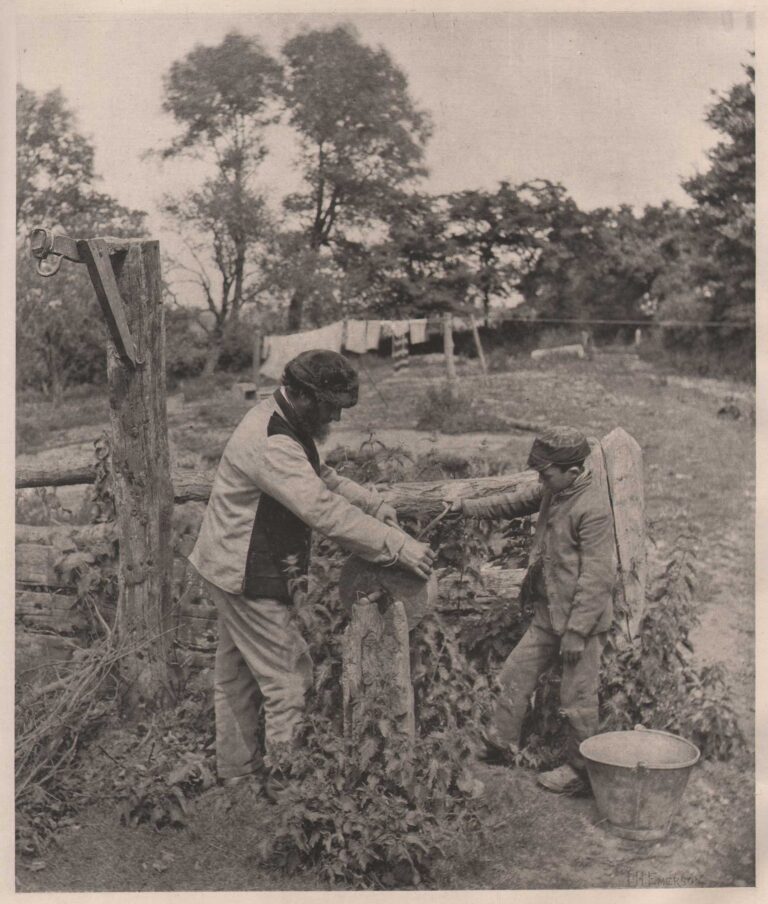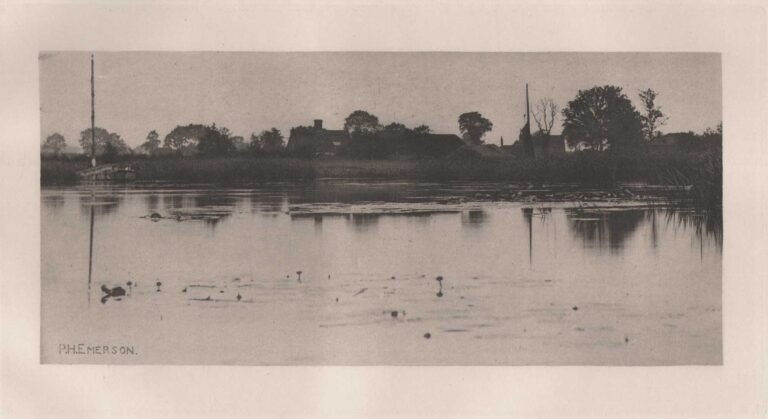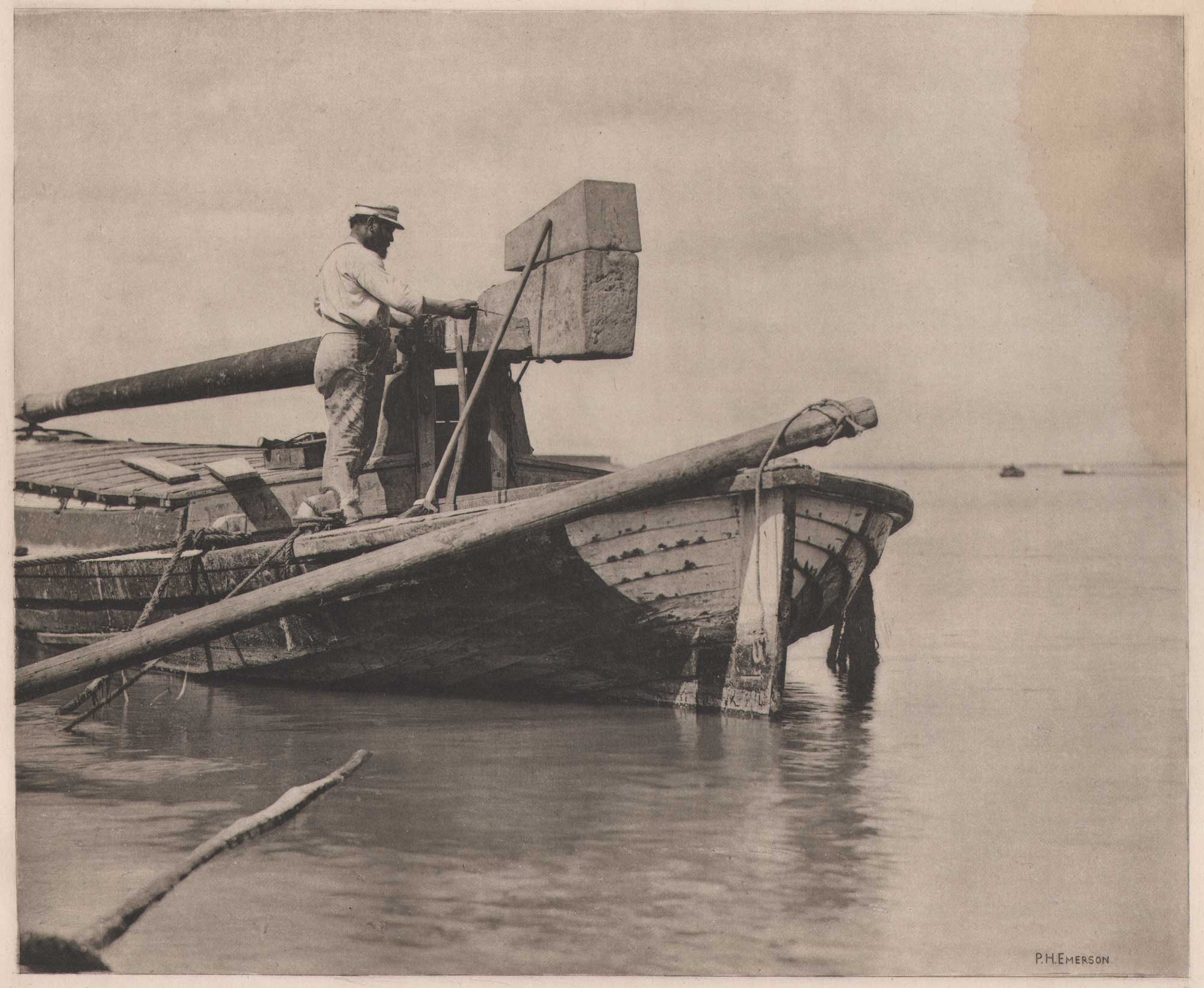
Mending the Old Wherry
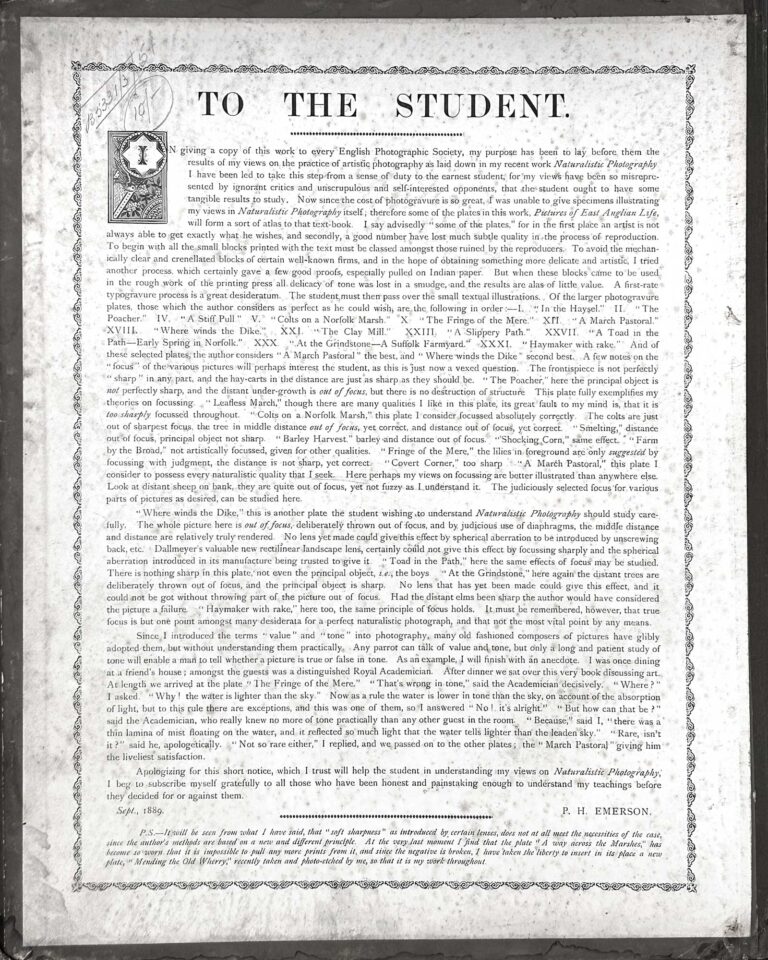
“At the very last moment I find that the plate “A way across the Marshes,” has become so worn that it is impossible to pull any more prints from it, and since the negative is broken, I have taken the liberty to insert in its place a new plate, “Mending the Old Wherry,” recently taken and photo-etched by me, so that it is my work throughout.” ⎯ P.H. Emerson, Sept., 1889, To The Student
From Chapter XVIII: Norfolk Marshes
Link to plate: A Way Across the Marshes, replaced after 30 pulls by Mending the Old Wherry.
Letterpress commenting on A Way Across the Marshes:
“In our second plate, far away extends the long, straight marsh-road, with its gleaming dikes on either hand-far away to the windmill, whose arms are lazily turning in the summer breeze. On the road, the thistles grow thick, their delicate purple crowns providing many a feasting-place for the sweet-voiced goldfinch or the raucous donkey. Ducks waddle up the marsh-road and slip into the dike, swimming quickly away from us. On the right stands a rick of hay, rich food for the horses now drawing the loaded tumbrils of corn from the grain-bearing marshes. To the left grow some willows in the hedgerow of a lonely marsh-farm. To the right extend the marshes, intersected by water-filled arteries on to the river-bank, discernible three marshes off. On the river-wall the cattle huddle together in groups, and stare listlessly at the passing wherries. Across the river, the red, smoke-blackened furnace of a brickyard rises from the marsh in bold relief against the blue sky. On the rising upland nestles another group of farm-buildings, from which can be seen the undulating marram-bound sand cliffs of East Norfolk, stretching away to the German Ocean beyond. The day is deliciously hot, and, after securing our plate, we return with our Broadsman to his light marsh-boat, and quanting down to a hard-bottomed reach of the river near by, settle down to an afternoon at perch-fishing.” p. 111