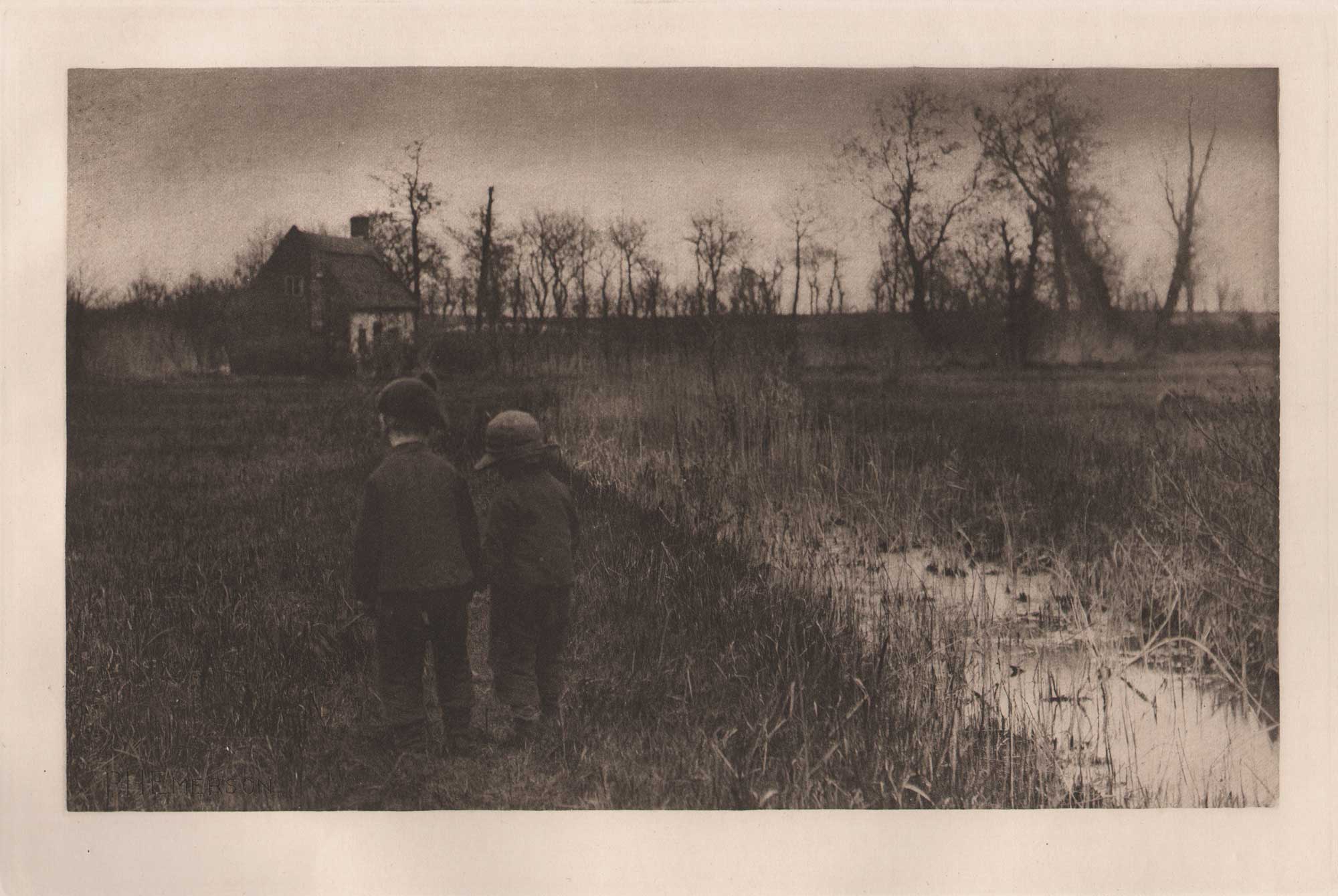
A Toad in the Path: Early Spring in Norfolk
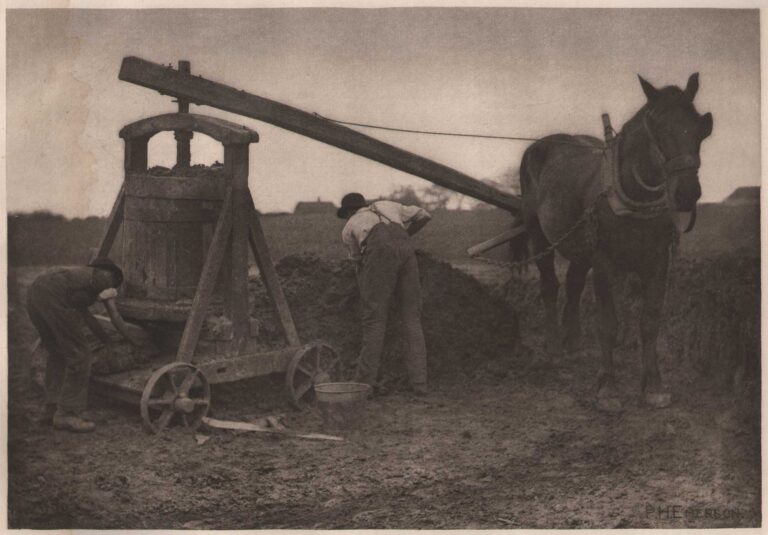
“Toad in the Path,” here the same effects of focus may be studied. There is nothing sharp in this plate, not even the principal object, ie., the boys.” ⎯ P.H. Emerson, Sept., 1889, To The Student
From Chapter XXIII: Norfolk Cottages
“The cottages given in our plates are specimens of Norfolk cottages. In one a dike leads up to the picture. This is not a typical specimen of the Norfolk cottage, but of the transition period from the artistic work of old master-bricklayers to the “penny-bank” architecture of the modern builders. This one is solidly built of stone, and, now that it is time-stained, is not ugly. On the left of the dike two little cottage-urchins have spied a toad in their path, and they have stopped to eye the jewelled creature, which has been enticed out on to the grass by the spring warmth.” p. 131
…“At most of these cottages you will find children not yet harnessed to the yoke of life’s work. This is the happiest period of their lives, and these little philosophers live with no care save the learning of the three R’s. In Norfolk fishing is the chief amusement of these children, and all day long you can see the urchins with rough hazel rod and line fishing for bream and roach, as shown in our plate, or you may see them fishing in the dikes for sticklebacks, as shown in a small plate. Many is the astonished child we have caught at these occupations, and bribed with pence to stand still for a few moments in certain positions, much to their astonishment and joy. But the seeds of avarice and deception lurk even in these young bosoms. We remember once hiring five boys as models for a fishing-picture. They came punctually at the fixed time, viz., 10 A.M. We rowed off to our chosen background for the picture, and after much worry and trouble took our pictures and returned a few minutes before noon. We paid our models for their two hours work, or rather play, giving them all, including the very youngest, sixpence each. These urchins straightway retired to a deserted cottage; a deputation was then sent to the village-grocer’s for eatables and sweets, and in that deserted cottage they spent the day in rough settler fashion. Late at night they returned home, and by consent each boy told his parents we had only just let them go; and when asked what we had paid them, they said, “Oh, nothink; the gentleman had only given the eldest boy a penny to be divided amongst them.” The parents were justly angered, and in a roundabout way messages reached us that we should never again have their children as models. Not wishing to get the urchins into trouble, we left the parents to believe such a ridiculous story, only we took care that the two biggest gossips in the village should have the correct version, and ensured this by judicious gifts of snuff.” p. 132