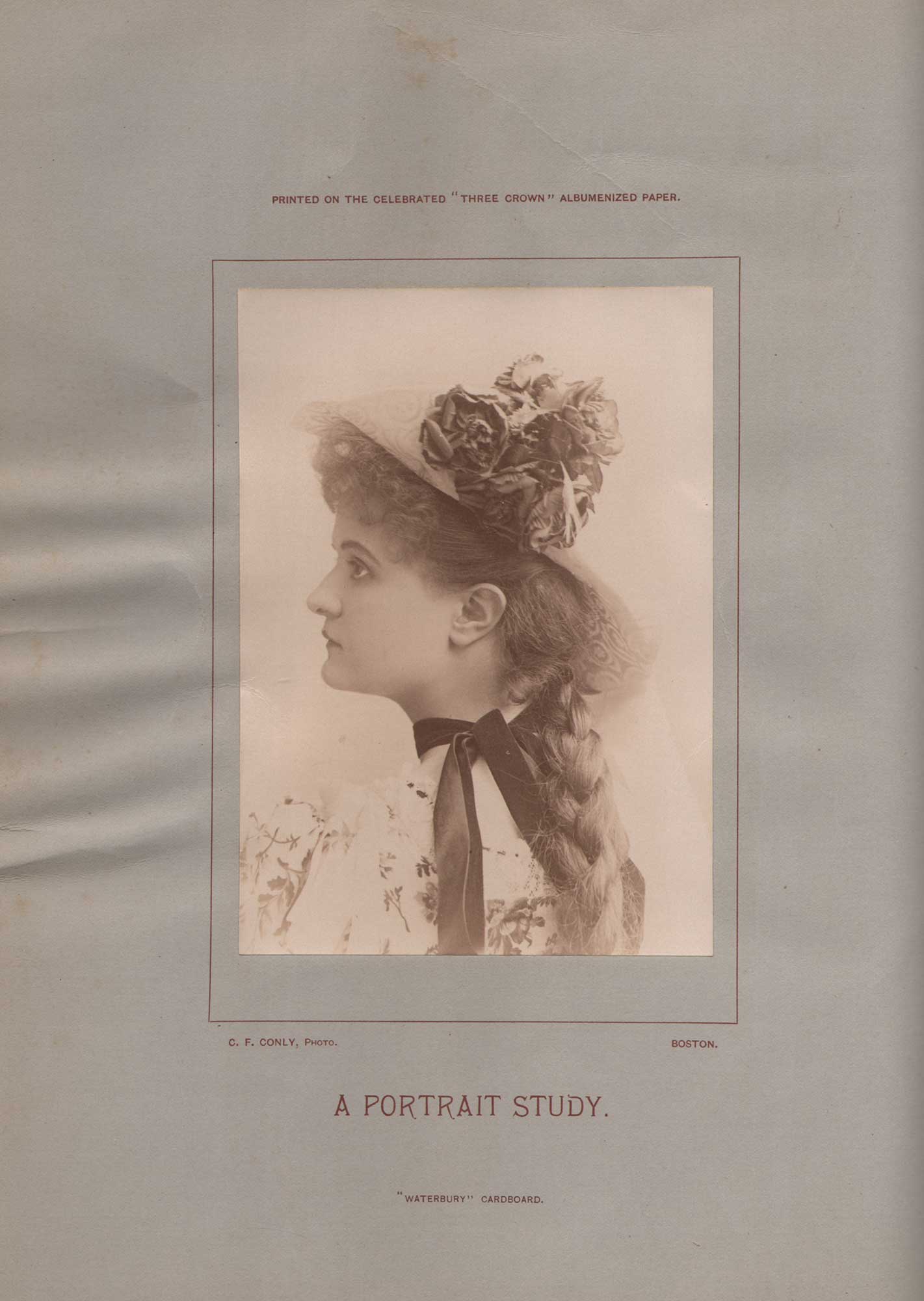
A Portrait Study
Editorial comment for this plate:
A PORTRAIT STUDY.
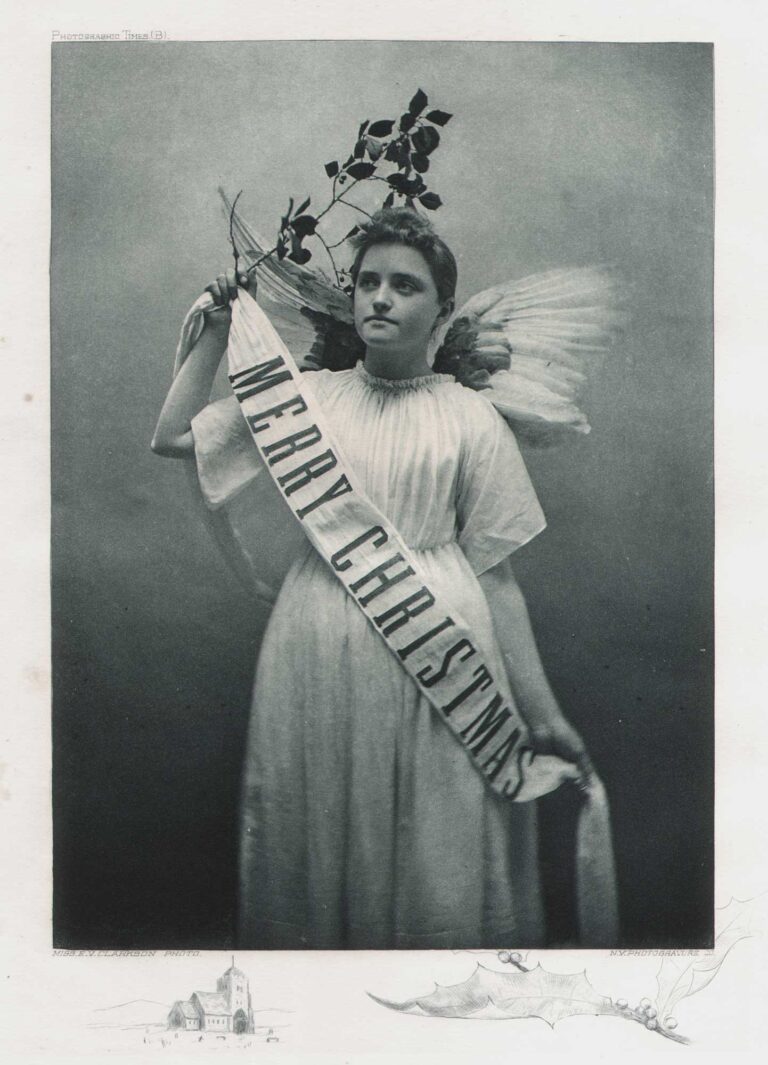
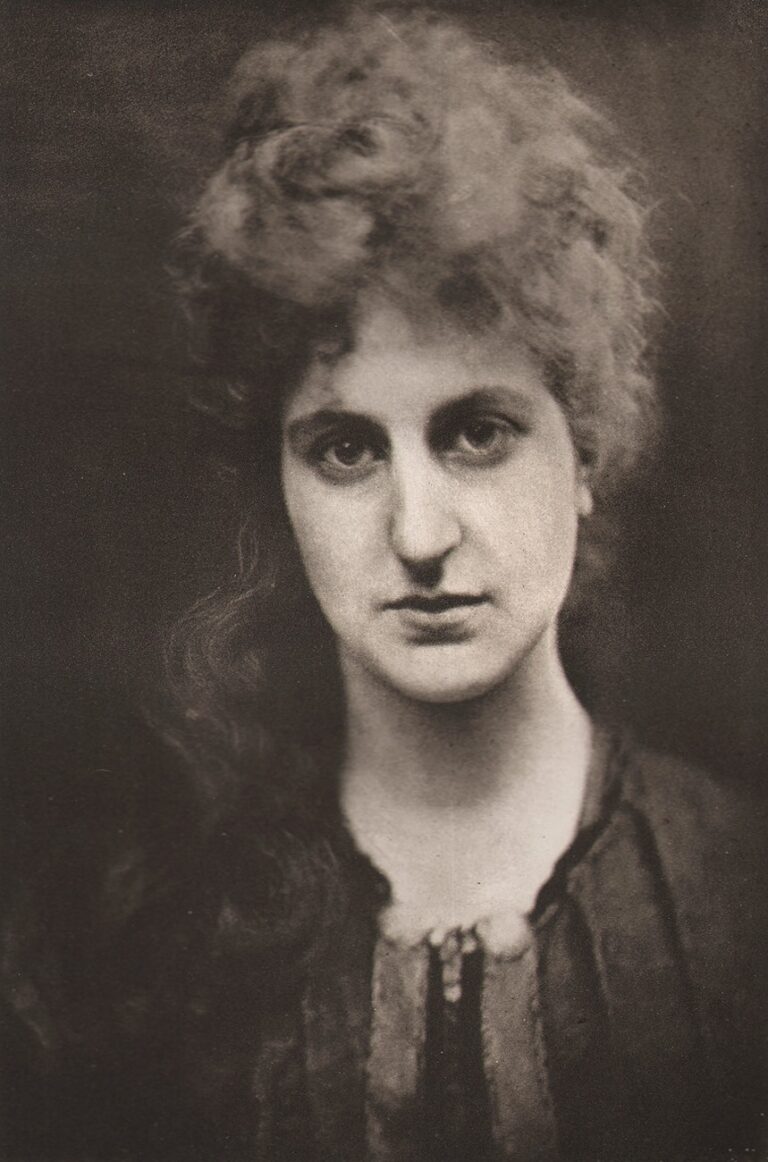
Our frontispiece, this week, is a characteristic portrait study from the studio of C. F. Conly, of Boston. The negatives were not made especially for this issue of THE PHOTOGRAPHIC TIMES, though, of course, the photographs were selected with special reference to their appearance in our magazine. A number of selections were made from a batch of portraits picked up at random by Mr. Conly from his everyday work. As such, they fairly represent the average work of a successful professional photographer, and as such will be found of great value to our readers as models and suggestions for their own work.
It may be interesting for some to know that the prints were made on the celebrated “Three Crown” albumenized paper, as is noted on the mounts; and that fact alone is sufficient to account for their surpassing technical qualities.
This standard brand of albumenized paper, though less advertised than other brands, has steadily grown in favor with photographers, because of its surpassing and uniform qualities, until now it is more widely used than perhaps any other kind of paper in the world. Some directions for working it, or indeed for working any reliable albumenized paper will be found in another place, for any good sensitizing and toning method will produce good results on a good paper.
‘The card mount is also worthy a special word of mention, as it represents a brand that, though very moderate in price, is enjoying a great popularity among both professional and amateur photographers. We give these facts because there seem to be many who are always interested to know about the materials used.
Charles F. Conly: 1846-1892
The following biography courtesy Broadway Photographs:
Late in his life, portraitist Charles F. Conly enjoyed telling the story of his inauspicious beginnings in the art of photography. He left his native Milford in his twenties dreaming of life on the Boston stage, an aspiration dogged with failure. One day, he was walking up Washington Street where performers got their portraits taken. At Warren’s Studio he noticed a sign: “Boy Wanted.” Out of a job, he ascended the two flights of stairs. Though somewhat older than a boy, he made application. He was the first to respond and “was put to work at a salary most surprisingly small.”
Almost immediately chief operator Sumner B. Heald began training Conly in various aspects of the photographic art. The studio’s brisk business had resulted in a press of work, so Conly rapidly progressed from menial maintenance to assisting in set up and printing. With Heald’s departure in 1874, Conly was suddenly elevated to the position of George K. Warren’s chief assistant. “Quiet, unassuming, courteous, and generous,” Conly possessed a temperament better suited to the posing parlor than the footlights. Yet two additional qualities would make him a superlative photographer: a curiosity about technology and a love of visual artistry.
At Conly’s urging Warren began experimenting with electric arc-light illumination as early as 1877. Conly was particularly concerned with the problems of illuminating large interiors—theaters particularly—with sufficient candlepower to enable photographs. When Warren met a sudden death in 1884, being run over by the Boston Express, Conly purchased the studio from his widow. He immediately announced himself as the successor to Warren and rebranded the studio, located at 465 Washington Street, as Conly’s Portraits. General portrait commissions were handled by his assistant operator J.H.C. Evanoff. David Cooper handled the print operations of the studio.
While Conly advertised that he could produce photographically-based crayon portraits, the bulk of his production consisted of straight images of posed performers in illusionist spaces. He had taken over Warren’s back paintings, added a prop wardrobe, a solarium full of tropical plants, and a paper mache rock outcropping. He favored distinct gestures, so his performers always appear to be performing. By the 1890s Conly had developed a special knack for creating effective children’s portraits in addition to his theatrical work.
While respected as a portraitist among the profession, Conly’s fame lay in his series of experiments with theatrical photography. On April 10, 1885, he used electrical illumination to photograph the audience attending the Bijou Theater in Boston. Though Conly always used the dry plate “instantaneous” process, reporters wryly commented on the difficulties Conly experienced getting the audience to remain still for the five seconds needed for exposure: “Ladies who were perfectly satisfied with their personal appearance before now began to find some fault in their wardrobe which required immediate attention. The gentlemen threw back their overcoats that the silk linings might have a respectable representation in the camera and struck various unnatural and uncomfortable attitudes supposed to be picturesque.” It took Conly three exposures to get an acceptable image. Copies of the image were presented to each attendee upon leaving the theater. When the company at the Bijou performed “Dreams, or Fun at the Photograph Gallery” on June 6 of that same year, a second audience photograph was taken as a souvenir. Conly’s first stage pictures of Boston performances would not take place until December 11, 1890, marking the 100th performance of “Soudan” and in early June of 1891 he photographed “Giroufe Giroufa.”
In late 1893 Charles Conly became ill. For a year he experienced complications until his death in December 1894. He was survived by a wife. J.H.C. Evanoff took over the studio.