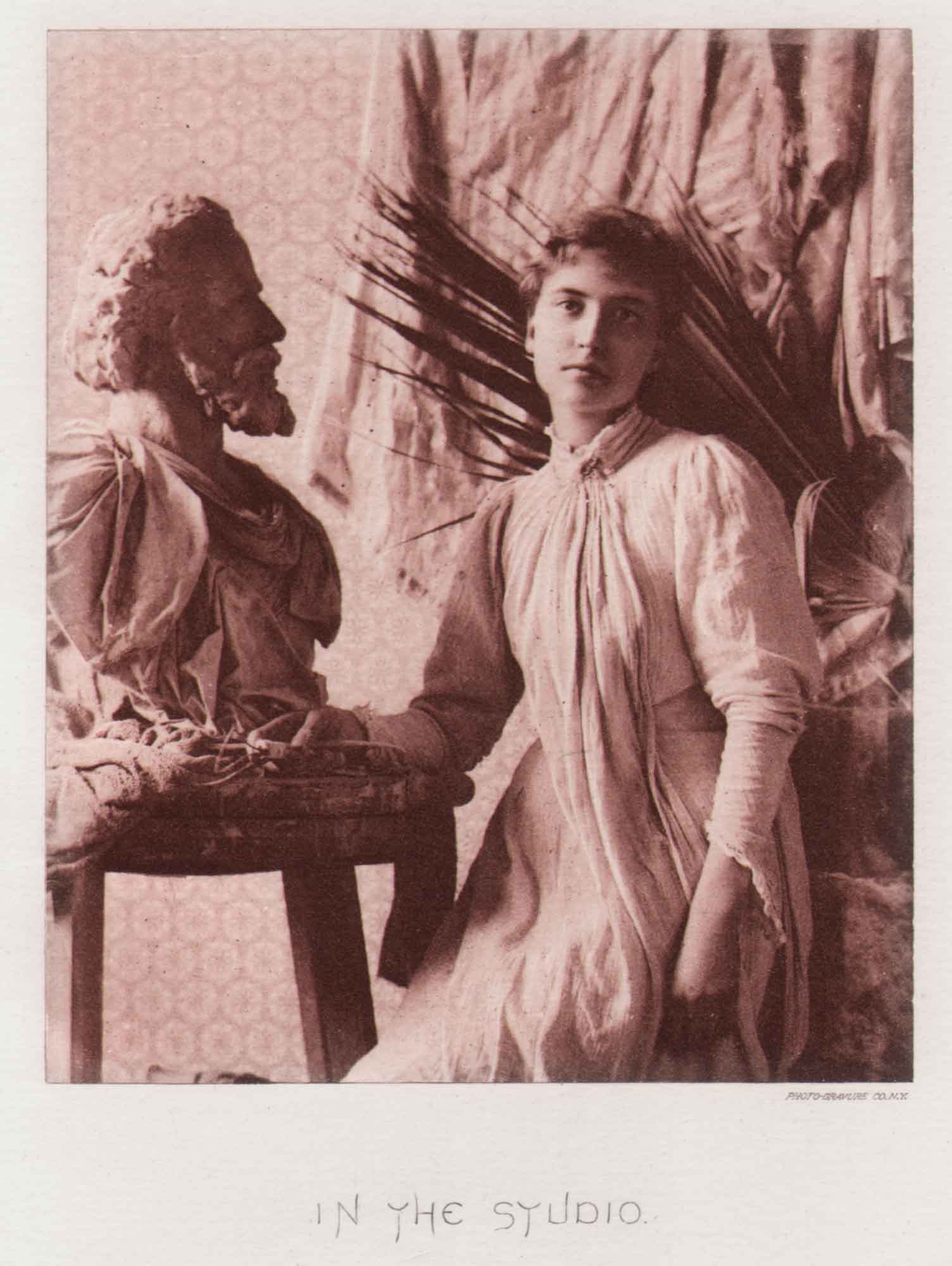
In The Studio
An unknown woman sculptress, the worked clay still coating her hands, sits next to the bust of a bearded subject in progress.
Oscar Regan Coast: 1851-1931
An amateur or one using photography to aid his career as a painter, Oscar Coast took photographs like this one in the late 1880s to at least 1899, the year he presented his photograph “Cloister Days” for copyright on Nov. 22. Born Oscar Ragan Coast, but using his mother’s maiden name Regan for his middle name, he was born in Ohio and educated at the University of Iowa. Before, he had first trained as an artist and studied in both Paris and Rome, the latter where he settled in 1867, mentoring with artist George Henry Yewell, (1830-1923) husband of his sister Mary Elizabeth (Mollie) Coast. (1.) “Oscar Regan Coast is an artist by profession, who spends his winters in the mountains of the west and his summers in the east. In spite of the fact that his time is chiefly occupied by travel, he calls Johnson county his home.” (2.)
A member of the National Academy of Design, he shows two works in the 63rd Spring exhibition in 1888, his address listed in the catalogue as 49 E. 21st St. By 1894, he was living part of the year in California and would eventually make Santa Barbara his long-time home, passing there in 1931. He maintained his New York City residence during this time however, becoming a member of The Salmagundi Club in 1897, and continuing the association with the club for at least 25 years.
The Iowa Alumnus journal profiled Coast in their January, 1921 issue. Excerpt:
An IOWA ARTIST
Mr. Coast’s career as a painter has been confined mainly to the portrayal of American land-scapes. This field he has cultivated with rare assiduity and skill. The brush fits his hand as readily as the pen that of the author, and his yield has been large. For years he has exhibited in the salons of the National Academy and elsewhere. He is naturally very reticent, and, if he is not so well known as many painters, a principal reason lies in his unwillingness to exploit himself or allow himself to be exploited. Scores of his paintings are hanging upon the walls of American homes, and some are in other countries. One of his largest and best canvases is owned by Lady Jebb, the widow of Sir Richard Jebb, one of the finest classical scholars of England. Few of his pictures are in the galleries; he has preferred to give them a more intimate domicile in private homes.
For the most part, however, he has made no effort to sell his paintings. He paints mainly because he must paint and retains or destroys a large part of his productions. Wherever Mr. Coast has traveled and he has traveled widely-he has painted scene after scene; the paintings accompanying this article are typical, though, as usual in such reproductions, the colorings and atmosphere are very feebly indicated.
Of late years Mr. Coast has often painted the mountains and plains and sea about Santa Barbara. The desert of our great Southwest has also allured him and inspired some of his best pictures. With a native horror of the bizarre, he has avoided the extremes of some modern schools and clung to conservative methods. For this very reason his paintings please and are the more likely to live. It would be hard to find warmer or more delicate tones than are seen in his sunlit forests, golden corn-fields, and cloud-capped mountains.
On the other hand his California nights are balmy and delicious, with deep blues and cool moonlight that lure and calm the be-holder. For the last quarter of a century Mr. Coast has resided most of the time in Santa Barbara, returning for frequent visits to Iowa City and nearly as often to the art colony in New York, where he has kept in close touch with the progress of his art and its modern makers and for a quarter of a century has been a member of the Salmagundi Club. His acquaintance with artists of the day is large and intimate.
During his long experience Mr. Coast has counted as his friends some of the foremost men in American art. His early days in Rome, Pieve di Cadore, -Titian’s country, and Paris brought him in contact with men like George Inness, Elihu Vedder, John Rogers, and many others.
To George Inness he accounts himself chiefly indebted, but he delights in relating the story of his art life with Inness and Vedder and Rogers and Wyant and Tryon and Brown and La Farge— the list is illustrious and almost endless. Among his dearest treasures is a collection of palettes which he has gathered in exchange with Inness, Wyant, Tryon, Moran, and others; the gem of the lot naturally being a huge palette of Inness, with a bundle of brushes which that artist was wont to use.
These palettes, along with a considerable miscellany of coins, paintings, rare books, and other objets d’art now form the “Oscar R. Coast Loan Collection” of the University’s Museum of Art and Archaeology; the owner has intimated that the collection will not be removed. Mr. Coast is wedded only to his art, and painting has been a congenial mistress. He is the most modest and unassuming of beings, a mild, cordial, friend-loving gentleman.
Few men are more charming conversationalists. He has been all over the world, has been a familiar of the greatest of men, and remembers quite minutely the scenes and persons of his travels. Everywhere he has been, he has picked up interesting bits of art and antiquities. The collection above mentioned contains so diverse objects as the front of a carved Florentine trousseau chest, a number of engraved Japanese sword hilts, fragments of cloth from Egyptian mummy cases, Greek coins, Byzantine paintings, Swiss carvings, etchings of Rembrandt, first editions, and an unexploded shell from the German bombardment of Paris in 1870. His interests are far from narrow.
A delicate constitution is responsible for the transformation of a prospective business man into an artist. The young Oscar was a frail lad. In his ‘teens his very life hung by a slender thread. His first voyage to Europe was undertaken for the benefit of his health, and to his friends it was intimated that he might never come back. But he did come back. Europe made him an artist, and he has often visited it again, but only to develop a genuine American style all his own.—pp. 109-11
- Excerpt, William Philip Coast; Leading Events in Johnson County, Iowa History (Clarence Ray Aurner / 1912) Note: his mother was Nancy Regan, with most biographies listing her maiden name as Oscar’s middle name. (Coast also studied with Thomas Hicks)
- (Burke, Doreen Bolger, American Paintings in the Metropolitan Museum of Art, Vol. III, A Catalogue of Works by Art and Artists Born between 1846 and 1864, 1980). (Herringshaw’s American Blue Book of Biography in 1926 lists Coast as also being a member of the Art Club of Washington and the Santa Barbara Art Club and stating he was unmarried.)
Sun & Shade: An Artistic Periodical
“Within the covers of Sun and Shade…We shall especially endeavor to encourage the artistic side of direct photography in all its phases,”—Ernest Edwards, president & publisher, 1889
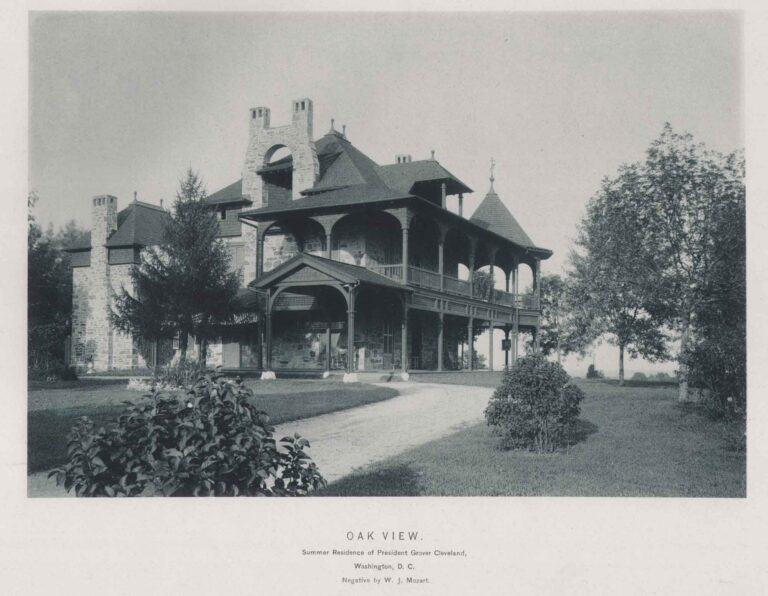
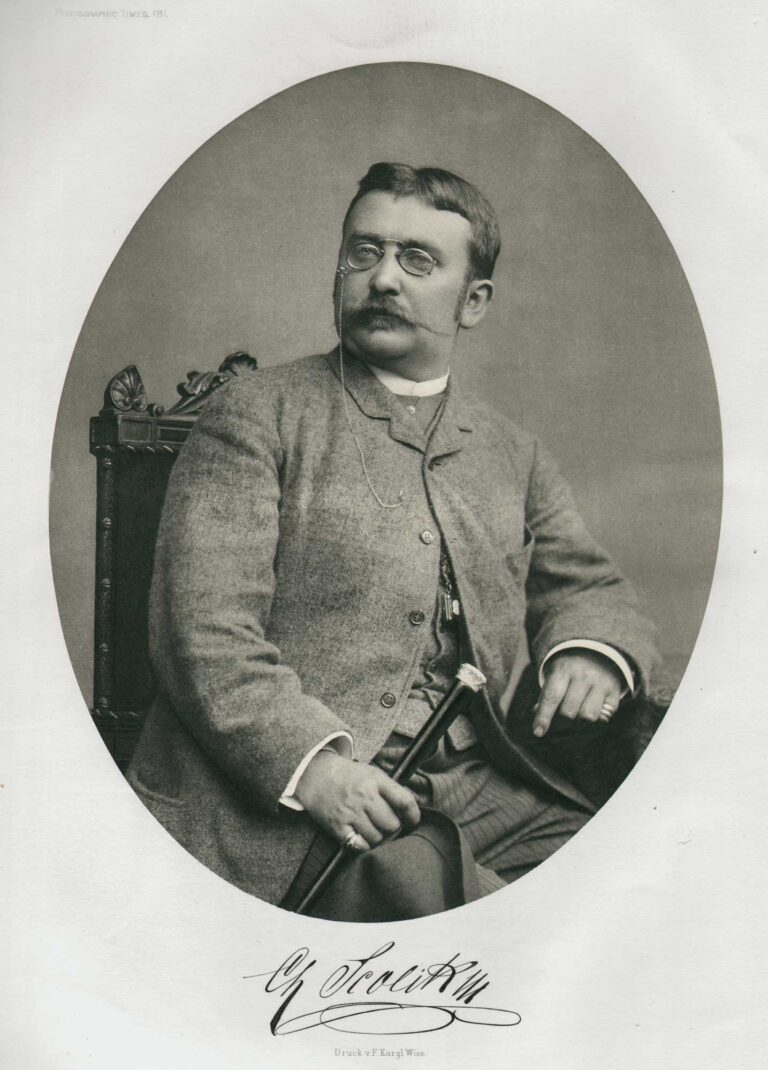
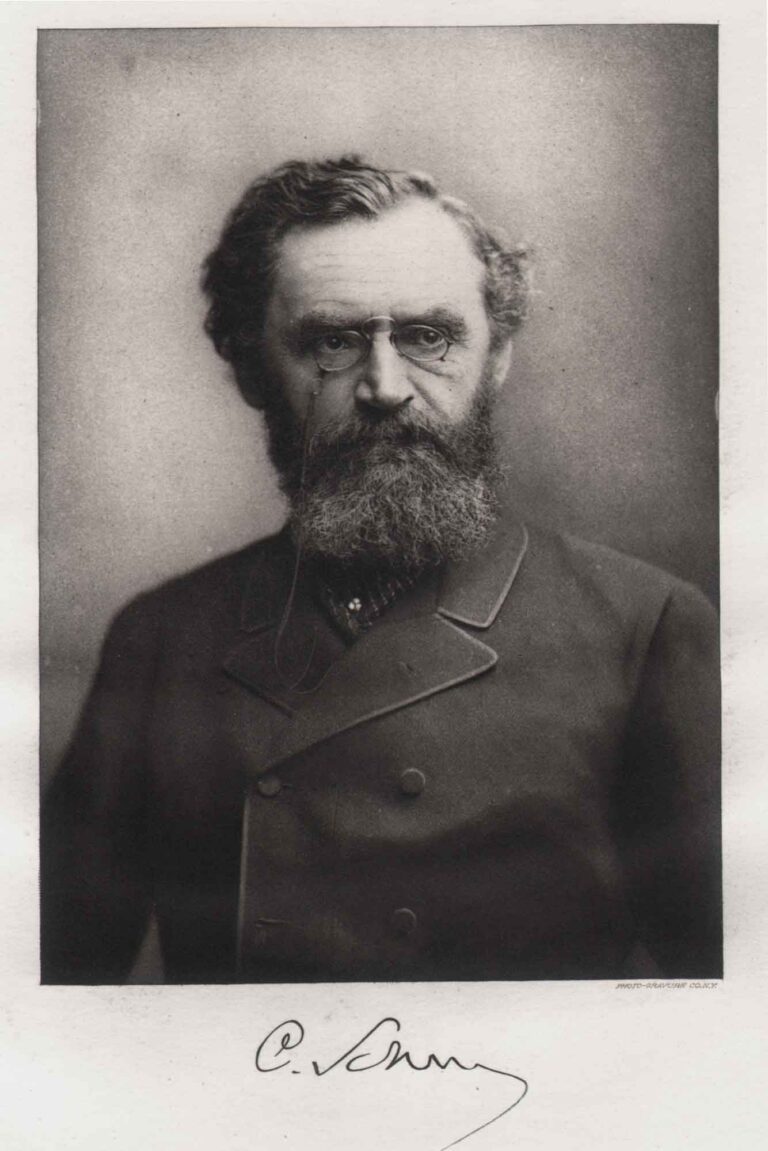
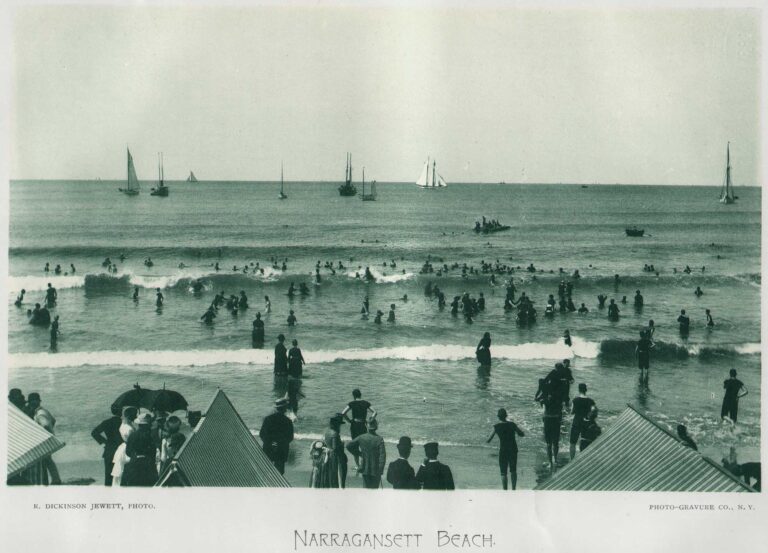
In July, 1888, the first issue of Sun & Shade: A Photographic Record of Events, was published in New York City by The Photo-Gravure Company. Essentially a high-class art periodical, each issue featured eight or more beautiful hand-pulled photogravures as well as plates printed in photogelatine, (collotype) and halftone. These were collected within a stapled, folio-sized magazine issued monthly. The subject matter included the work of leading amateur and professional photographers, as well as works of art—many from the galleries at The Metropolitan Museum of Art in Manhattan. The December issue—Christmas themed—featured a specially designed cover printed in green ink. Success was swift. The first issue sold 1000 copies “in a fortnight”. (1.) Within the first year, Sun & Shade quickly increased circulation to 4000 copies a month. With a public demand for reprinting earlier issues, this success lead to a rebranding, after which, beginning with the September, 1889 issue, the magazine was renamed Sun & Shade: An Artistic Periodical. The final issue was March, 1896, when financial issues to the parent company, spurred by the eventual May, 1896 bankruptcy of the N.Y. Photo-Gravure Company, forced its closure.
Sun & Shade would become the ultimate statement of the many skills and inquisitive mind of Englishman Ernest Edwards. (1836-1903) Essentially his own printed passion project, the magazine was fueled by his ongoing love of photography in the field (issues featured many plates by him over the years) and a deeply scientific mind which pushed the advancement of the state of photo-mechanical reproduction and fine printing.
The son of a clergyman from Bloomsbury in London, he initially made a name for himself taking photographic portraits of eminent people in his Baker Street gallery. (Charles Darwin sat for him several times) His love of the outdoors also bore fruit and he became an accomplished alpine photographer. But his real interest centered around photo-mechanical reproduction. In 1869, he took out a patent in England for his own rudimentary collotype process called heliotype. In the Fall of 1872, he moved across the pond along with his wife Charlotte, and became superintendent of Boston’s Heliotype Printing Company after selling the American rights to American publisher James Ripley Osgood. (1836–1892) Edwards ran the Heliotype Printing Co. there until the end of 1884. The following year the James R. Osgood & Co. went bankrupt, although not a result of the heliotype division.
Growing restless in Boston, he then moved to New York City, where he established a new firm in March, 1885: The Photo-Gravure Company, (subsequently renamed The New York Photo-Gravure Company) with offices in Manhattan and a leased printing factory in Brooklyn. In 1887, his company received perhaps the one commission it’s best known for today: the printing of 781 collotypes, which Edwards called photogelatine plates, making up the monumental publication:
Animal Locomotion. An Electro-Photographic Investigation of Consecutive Phases of Animal Movements, 1872-1885, with the landmark sequenced motion study photographs taken by British photographer Eadweard Muybridge.
Restructured in 1891 as the New York Photogravure Co., Ernest Edwards continued to advance the state of photo-mechanical printing during his final decade, with Sun & Shade publishing some of the earliest examples of his own invention by 1894: plates printed in a three-color process called chrome-gelatine, a variation of his heliotype process.
Quality Rather than Quantity
Even though it survived less than eight years in print, describing Sun & Shade in Ernest Edward’s own words is perhaps the best posterity for this important photographic periodical with an artistic heart. One year after its’ debut, he wrote the following, published in The Photographic Times for August 2, 1889:
“A year ago we commenced the publication of our novel venture in journalism Sun and Shade, a Picture Periodical without letterpress, almost as an experiment, with a modest list of less than fifty subscribers. To-day we are printing an edition of 4,000 copies monthly. A sufficiently convincing proof of the wisdom of our hope that there was room for us.
“In our rapid growth the wish has been indicated unmistakably for the higher grade of pictures, and of the higher class–always for quality rather than quantity. Following rather than leading such a wish, we feel that we make no mistake in marking the future career of the magazine to be rather that of an artistic periodical than a photographic record of events.
*Our efforts shall be directed in the future to make Sun and Shade an artistic periodical which shall be not only pleasing but educational in its broadest sense, Some of our plans may be briefly referred to.
“We shall reproduce the leading pictures in the great collection of the Metropolitan Museum of Art. Within the covers of Sun and Shade will be found from time to time, reproductions of the works of American artists. We shall especially endeavor to encourage the artistic side of direct photography in all its phases, And we shall supplement these special features with examples of sculpture, architecture, and industrial art. If in the future we receive as hearty a response to our efforts as we have received in the past, our task will be indeed pleasant and our road to success a royal one.” (p. 394)
- Notice: Sun & Shade: October, 1888. The August and September issues did not appear.