Featured Entries from the Photoseed Blog

Games
2 Entries

Spring at Last

Apr 2026 | Alternate Processes, Artists, Childhood Photography, Framing, Games, New Additions, Unknown Photographers

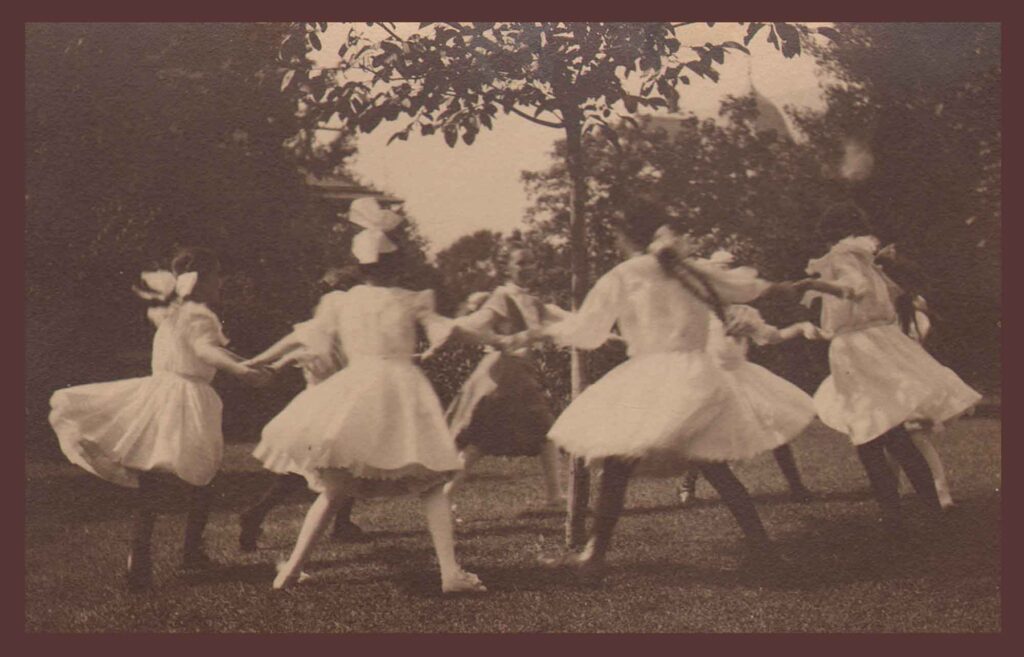
Girls Playing “Here We Go Round the Mulberry Bush”, unknown photographer, possibly Adolph Petzold (American, born Germany, 1858-1936), Aristo (gelatin silver) divided back rppc, ca. 1910-15, 8.5 x 13.6 cm. Unsigned, this photograph was purchased along with a postcard to Petzold written by critic Sadakichi Hartmann (1867-1944) postmarked 1904, along with several Petzold frame labels from the 1902 San Francisco Photographic Salon. From: PhotoSeed Archive

Enough with the cold and frosty mornings.

Our mountains of New England snow have finally receded into the earth and air. With this photo, will the innocence and joy of children appearing to play along to the English nursery rhyme and singing game “Here We Go Round the Mulberry Bush” get you in a Spring mood? I certainly hope so. With our efforts at yard work already high on the agenda of late, here’s a brief respite from those wonderful chores should you be doing the same, or work in general. Enjoy these selections from our archive to marvel at while beauty springs from the ordinary to become extraordinary in your own neck of the woods.
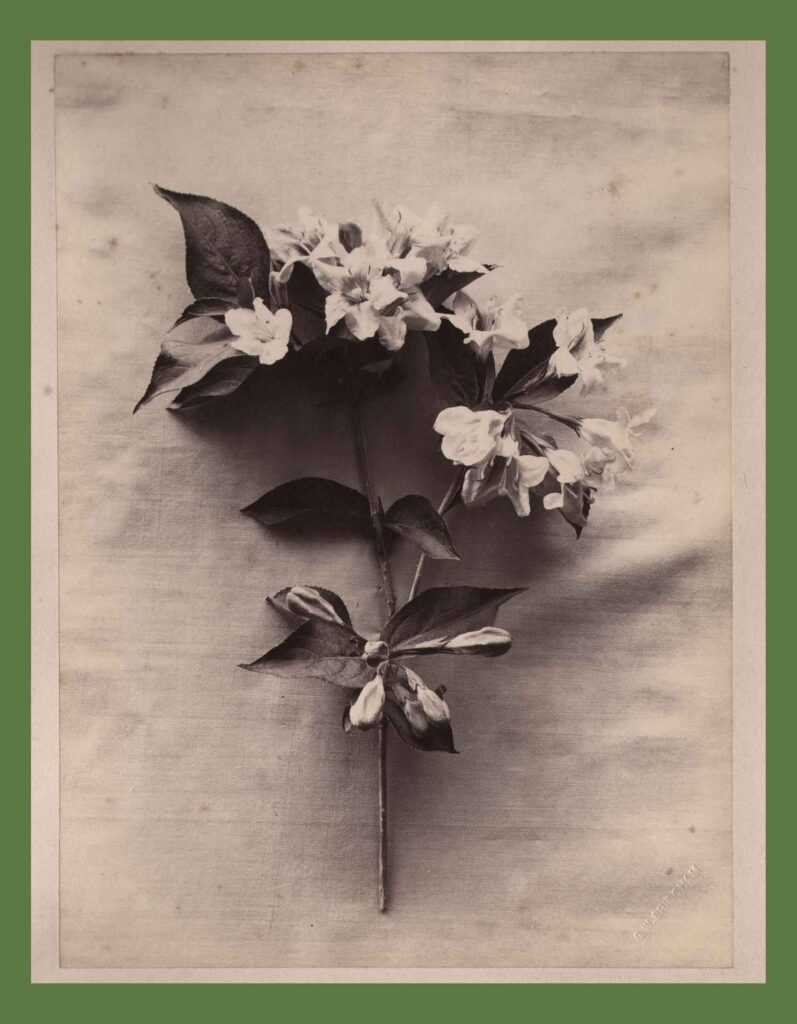
“Branch from Wild Apple Tree”, (possibly Pyrus Malus) S.W. Bridgham, American, (1842-1915) mounted albumen silver print, ca. 1880-1890, 20.4 x 15.0 | 27.8 x 23.2 cm. Samuel W. Bridgham held the vice presidency of the New York Camera Club in 1892 and later became president. In March 1891, Anthony’s Photographic Bulletin reported some flower studies from “the same camera” taken by Bridgham—part of recent efforts—“gave token of careful work.” From: PhotoSeed Archive
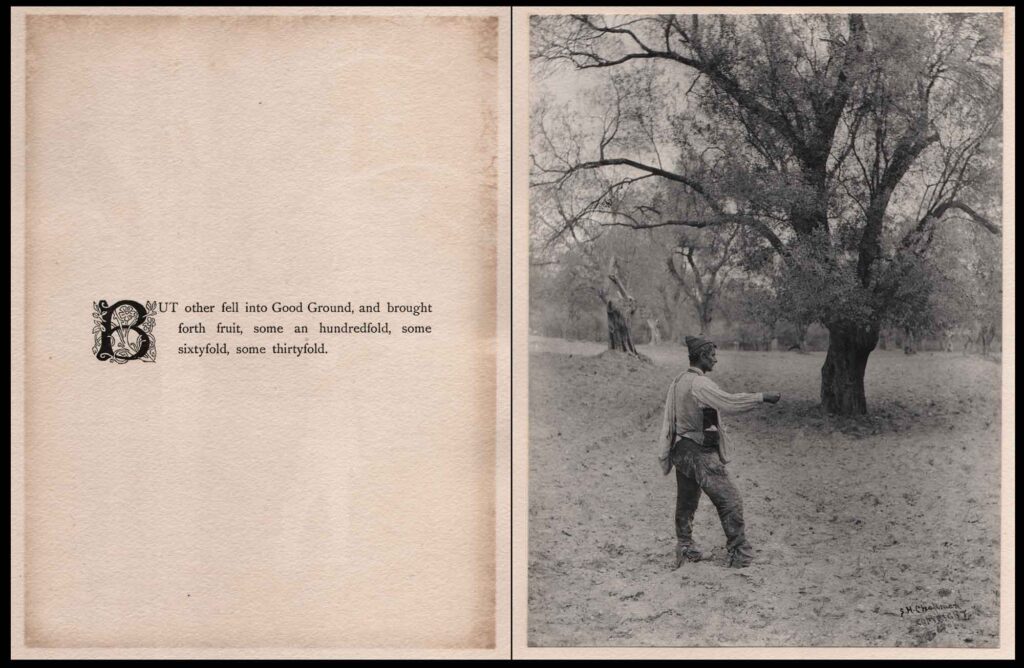
“But other fell into Good Ground,… with original letterpress page at left. Samuel Hudson Chapman, American (1857-1931), mounted platinum print within self-published volume: “The Parable of the Sower, Illustrated From Life, With The Series of Pictures Awarded The Allison Silver Cup of the Photographic Society of Philadelphia For the Year 1900“, S.H. & H. Chapman 1348 Pine Street, 1901: 19.7 x 14.6 | 31.5 x 25.4 cm. A farmhand sows seeds in the springtime, most likely taken in the Italian countryside. A dealer in rare coins along with his brother Henry, this Philadelphia resident was an accomplished photographer and president of the Photographic Society of Philadelphia at the time of publication. From: PhotoSeed Archive
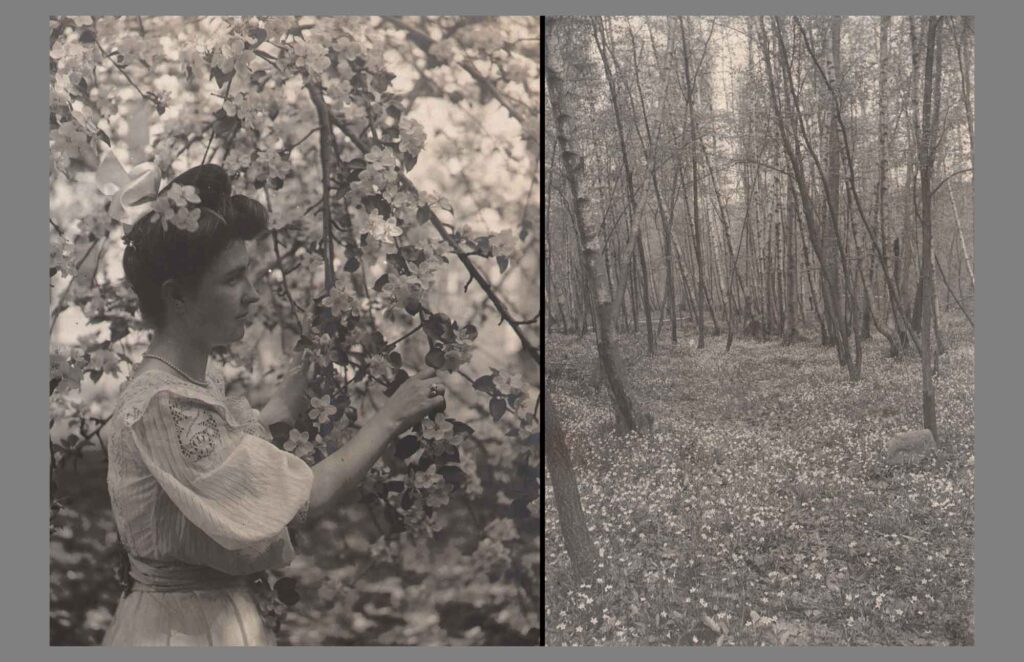
L: “Clare Cressey Shipman with Apple Blossoms”, 15.5 x 11.3 cm. R: “Wooded Carpet of Spring Blooms”, 17.3 x 11.6 cm. Both: C.M. Shipman: American, 1874-1947, platinum: ca. 1904 or before, tipped to black art-paper album leaf, 27.9 x 36.0 cm. Clare Cressey Shipman, (1879-1944) spouse of amateur photographer Charles Melville Shipman, examines apple blossoms in the Springtime. The photograph was most likely taken in the borough of Richmond on Staten Island, New York City, where the couple lived at the time. From: PhotoSeed Archive
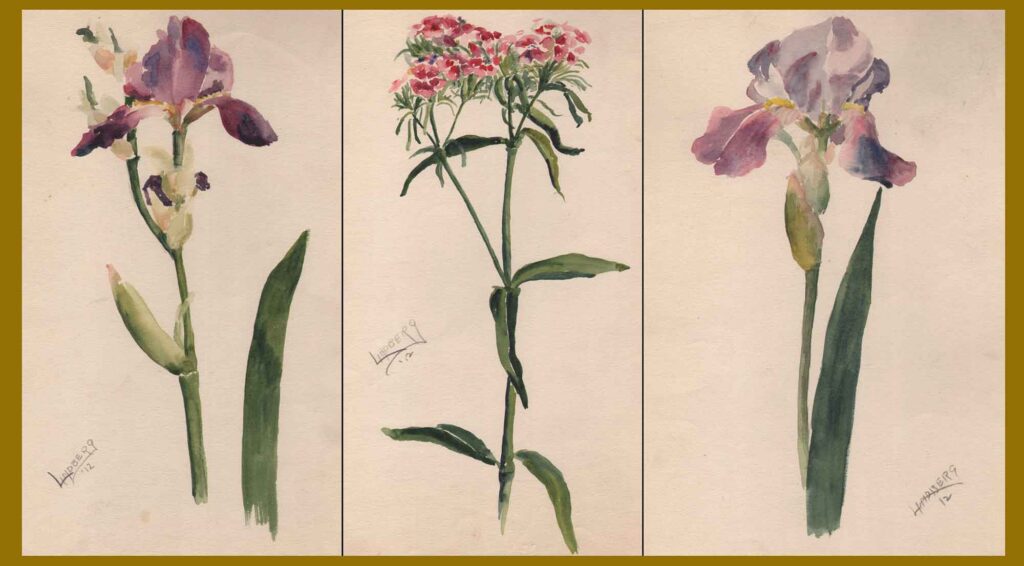
 

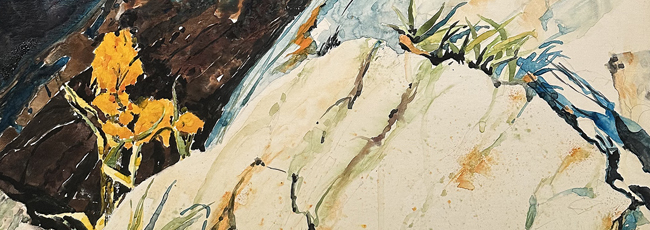
“Watercolor Studies: Purple Iris, & Sweet William at Center”, each dated and signed 1912, Arthur H. Lindberg, American, 1895-1977, each leaf: 30.5 x 22.7 cm. The Burchfield Penney Art Center at Buffalo State College holds the artist’s work: bio: Arthur H. Lindberg was a realist artist, illustrator, and teacher. Many of his works are comprised of Buffalo’s industrial scenes, factories, grain elevators and steel plants during the 1940s and 1950s. He also portrayed the beauty of nature through his use of oil, watercolor and pastel. He was drawn to water as a subject. particularly waterfronts of the New England area. Lindberg was born in 1895 in Worcester, Massachusetts, and began taking art classes at the Worcester Art Museum at the age of twenty. He continued his studies at the Pratt Institute in Brooklyn for two years before serving in France during World War I. He briefly returned to Worcester following his service, then continued his art training in New York during the late 1920s and early 1930s. He studied at the Grand Central School of Art under Harvey Thomas Dunn and Dean Cornwell. as well as the Art Students League of New York City under Frank Vincent DuMond and George Brandt Bridgman around 1935. He returned to the Pratt Institute the following year, receiving his Bachelor of Fine Arts degree in 1939.” From: PhotoSeed Archive
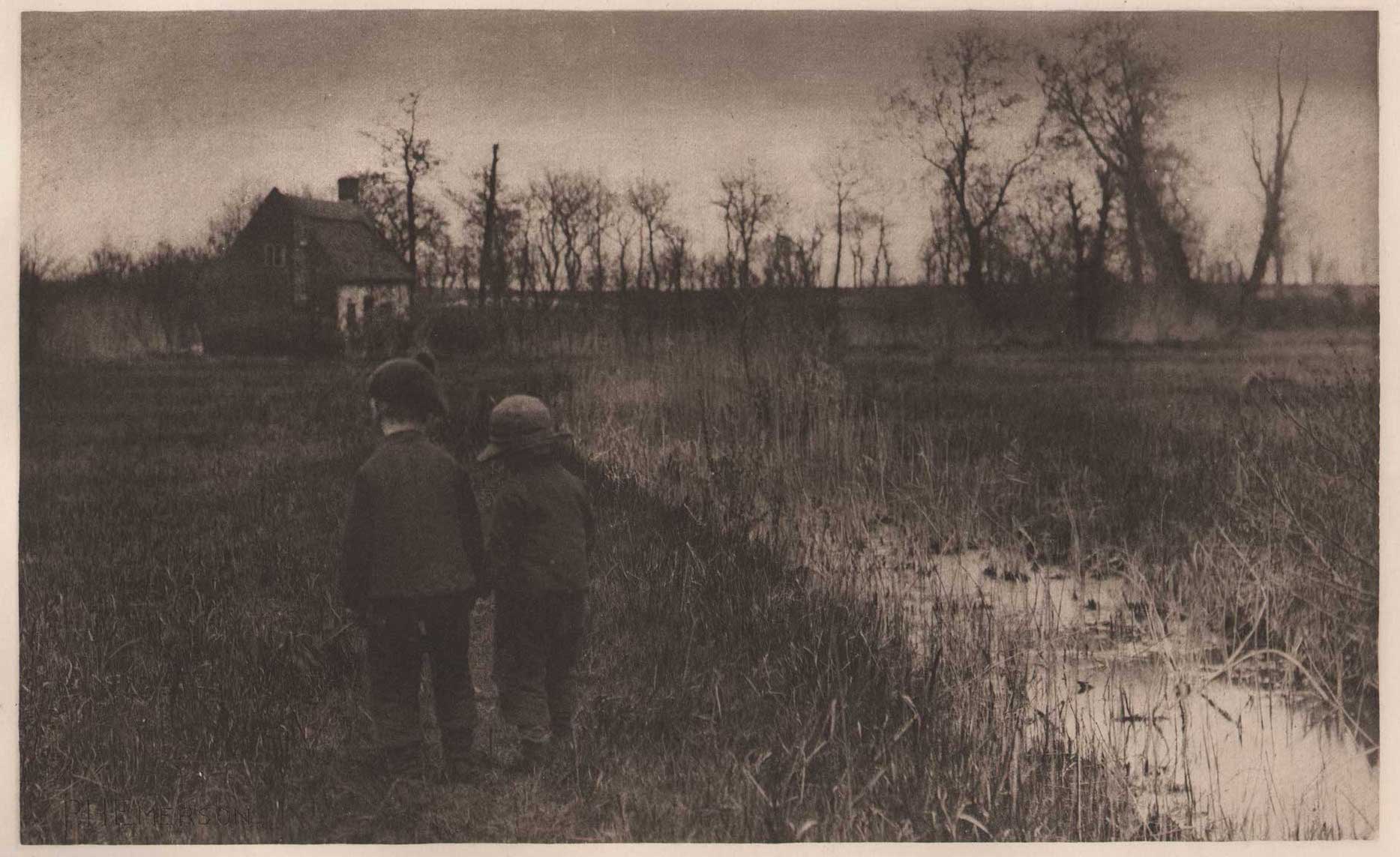
“A Toad in the Path: Early Spring in Norfolk”, 1888, P.H. Emerson, English, born Cuba, 1856-1936, hand-pulled photogravure from Pictures of East Anglian Life, 16.1 x 26.2 | 33.5 x 42.5 cm. Originally entitled A Toad in the Path, this work was registered for copyright at The National Archives in London in December, 1886. From the letterpress: “The cottages given in our plates are specimens of Norfolk cottages. In one a dike leads up to the picture. This is not a typical specimen of the Norfolk cottage, but of the transition period from the artistic work of old master-bricklayers to the “penny-bank” architecture of the modern builders. This one is solidly built of stone, and, now that it is time-stained, is not ugly. On the left of the dike two little cottage-urchins have spied a toad in their path, and they have stopped to eye the jewelled creature, which has been enticed out on to the grass by the spring warmth.” (p. 131) From: PhotoSeed Archive
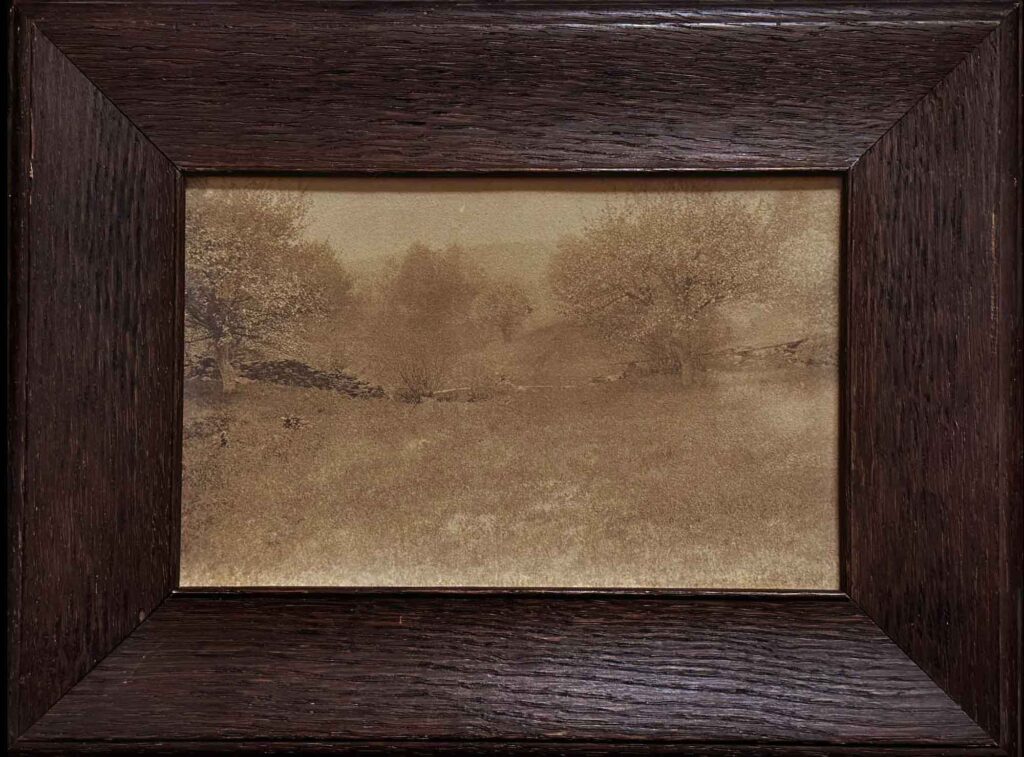
“Meadow with Stone Wall in Springtime”, ca. 1910 or before, unknown American photographer, mounted platinum print shown in original quarter-sawn oak frame without glass, 12.7 x 20.1 | 12.5 x 20.1 cm. An impressionistic platinum print study of a meadow in Springtime. The composition is bisected by sections of a stone wall and flanked by flowering trees. From: PhotoSeed Archive
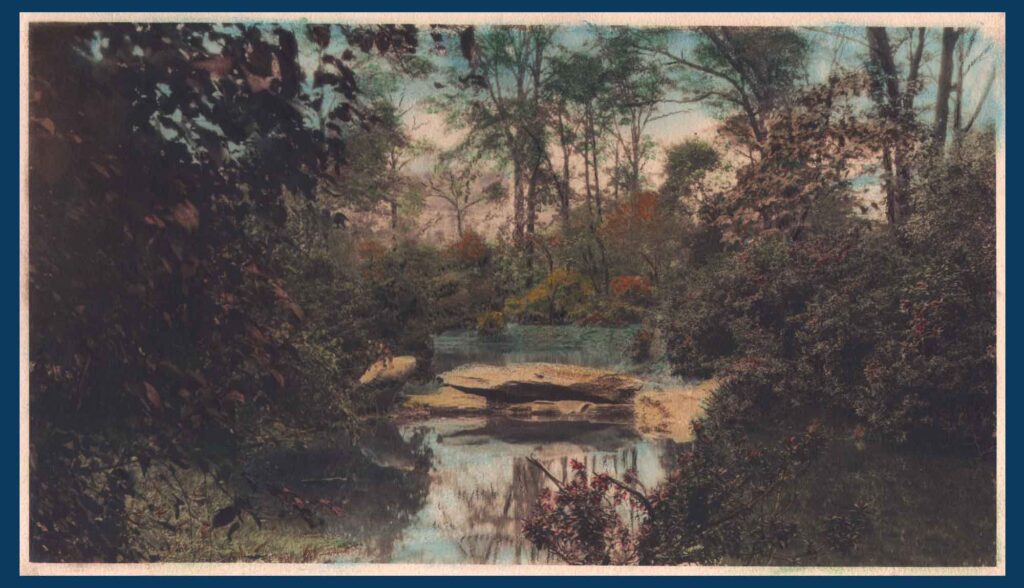
 

“Brook in late Spring or Early Summer”, ca. 1920-30, C.W. Chamberlin, American, 1874-1960, hand-colored bromide print, 13.9 x 25.0 | 15.1 x 26.2 cm. A member of the Cleveland Photographic Society, amateur photographer Charles Chamberlin ran a camera store in Cleveland, OH in the 1920’s. Known as the Kamera & Kraft Shoppe, they advertised: “Kodaks, Picture Framing, Developing and Printing – All Work Done on Premises. Chamberlin was assisted by his wife Orilla Birdell Churchill Chamberlin (1874-1961) who apparently hand-colored customer photographs, including this amateur effort by her husband. From: PhotoSeed Archive
19th Century Game Theory

Oct 2020 | Alternate Processes, Cameras, Engraving, Games, History of Photography, New Additions, Publishing

19th Century amateur photographers faced trials and tribulations in mastering their new found craft, put into the spotlight after photography itself became a growing mass medium with the marketing of Kodak’s #1 box camera in late 1888.

In 1889, taking advantage of this new large audience-by giving them a fun diversion- the Milton Bradley company of Springfield, Massachusetts produced what is believed to be the world’s first card game on photography, one they called “The Amateur Photographer”.  So now, the agony and ecstasy experienced by those dedicated amateurs who owned more advanced cameras and maintained wet darkrooms while embracing art and science could be enjoyed by all. PhotoSeed recently acquired 24 cards of this game from the original set of 36.

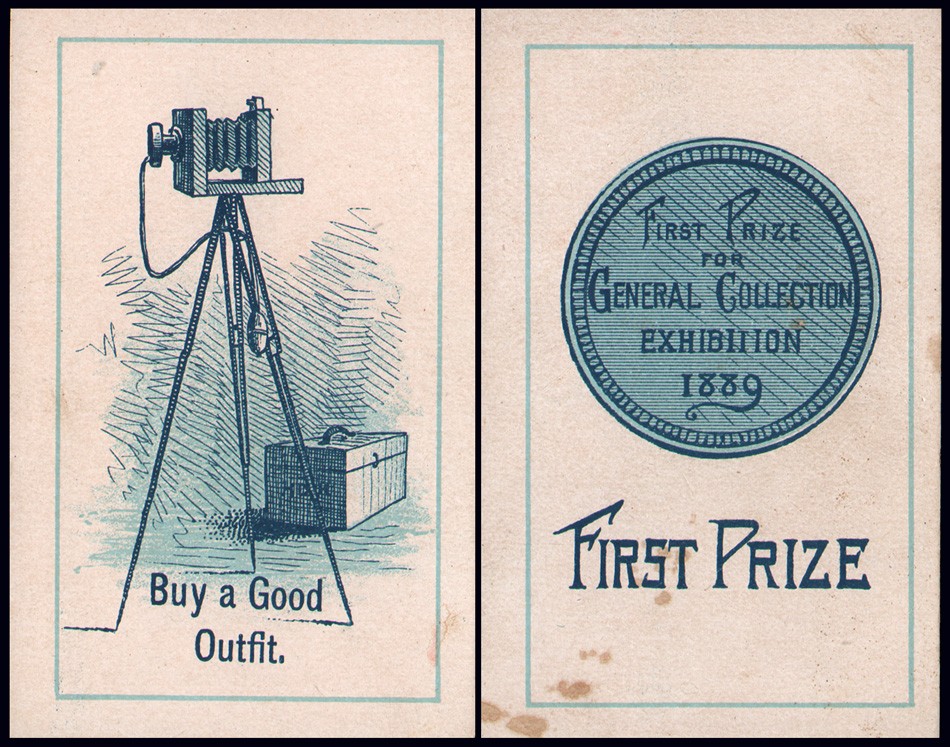
Left: “Buy a Good Outfit” : Right: “First Prize”. 1889. Individual coated-paper lithographic playing cards measuring 8.9 x 5.6 cm (3.5 x 2.25”). Milton Bradley Company, Springfield, MA. The cards making up the game “The Amateur Photographer” were illustrated to show “the triumphs and “hard luck” of an amateur photographer in a way that no member of the craft can fail to appreciate”. From: PhotoSeed Archive

The directions for this Victorian card game can be seen printed below in a vintage advertisement for the 1889-90 Milton Bradley Company “Catalogue of Games, Sectional Pictures, Toys, Puzzles, Blocks and Novelties”. 

For the most part up to the present day, physical card and board games have never featured the character of the photographer, although video games beginning in the 1990’s have included many, including: “Polaroid Pete” (1992), “Pokémon Snap” (1999), “Dead Rising” (2006): excerpt: “gamers play photojournalist Frank West, who somehow got stuck in a shopping mall in Colorado during the zombie apocalypse. Frank has to fight his way out through hoardes of zombies and uncover the truth with his camera.” and “Spiderman 3” (2007).

Instead, popular culture has taken the lead, with the larger than life character of the photographer (for good and bad) celebrated in films taking hold in our collective imaginations. Some that come to mind by this writer include James Stewart’s character spying out his apartment window using a telephoto camera lens in Alfred Hitchcock’s masterful film “Rear Window”, (1954) and Peter Parker’s more recent alter-ego occupation sans Spiderman suit. Enjoy the following select game cards from this surviving set.

Left: Title Page from “Catalogue of Games, Sectional Pictures, Toys, Puzzles, Blocks and Novelties Made by Milton Bradley Company”. Right: Catalogue listing for card game “The Amateur Photographer” in same volume, 1889-90. (p. 10) Courtesy: Internet Archive

Left: “Try an Instantaneous Shot” : Right: “Film Comes Off”. 1889. Individual coated-paper lithographic playing cards measuring 8.9 x 5.6 cm (3.5 x 2.25”). Milton Bradley Company, Springfield, MA. The cards making up the game “The Amateur Photographer” were illustrated to show “the triumphs and “hard luck” of an amateur photographer in a way that no member of the craft can fail to appreciate”. These two negative value cards show two common problems: film emulsion sensitivity or improper camera settings on left card reveals the amateur’s error of not being able to “stop” the action of a race horse while the chemical darkroom problem of a peeling film emulsion (washing too vigorously perhaps?) ruining the masterwork of a sailboat photograph at right. From: PhotoSeed Archive

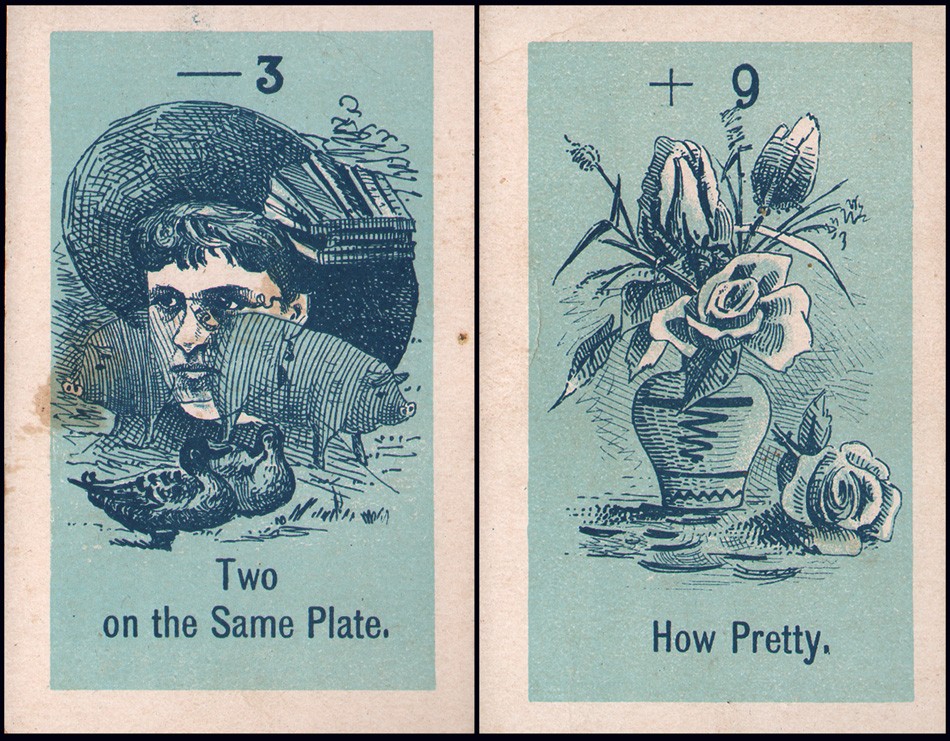
Left: “Two on the Same Plate” : Right: “How Pretty”. 1889. Individual coated-paper lithographic playing cards measuring 8.9 x 5.6 cm (3.5 x 2.25”). Milton Bradley Company, Springfield, MA. The cards making up the game “The Amateur Photographer” were illustrated to show “the triumphs and “hard luck” of an amateur photographer in a way that no member of the craft can fail to appreciate”. The negative value card at left shows the common problem of exposing the same photographic plate twice for two different scenes while at right, a positive value card shows a seemingly perfect picture of a bouquet of flowers. From: PhotoSeed Archive

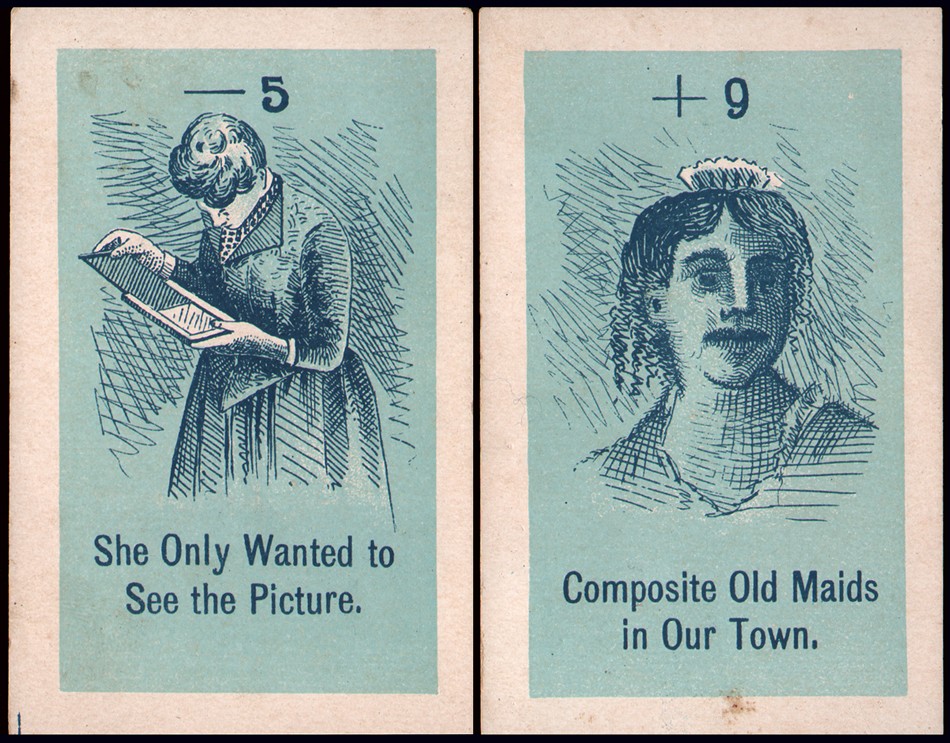
Left: “She Only Wanted to See the Picture” : Right: “Composite Old Maids in Our Town”. 1889. Individual coated-paper lithographic playing cards measuring 8.9 x 5.6 cm (3.5 x 2.25”). Milton Bradley Company, Springfield, MA. The cards making up the game “The Amateur Photographer” were illustrated to show “the triumphs and “hard luck” of an amateur photographer in a way that no member of the craft can fail to appreciate”. Gender sexism depicting the foibles of the female sex was alive and well when Amateur Photography first came into fashion- evidenced by the negative value card at left of a woman peeking at the results of an exposed photographic plate before the negative was properly fixed in the darkroom. Owing to the fact Photography was then a very expensive hobby and career opportunities for women in general were completely lacking, the majority of practitioners were men. But this would soon change, particularly after the dawn of the 20th Century, when Photography actually became one of the few occupations women were encouraged to pursue outside the home. At right, in a twist of this same gender sexism, a positive value card reveals itself in the form of this photographic portrait of an “old maid”, complete with mustache and tiara? or hair comb- with comparisons to later portraits of Queen Victoria by the card artist possibly being the so-called “humorous” intent. From: PhotoSeed Archive

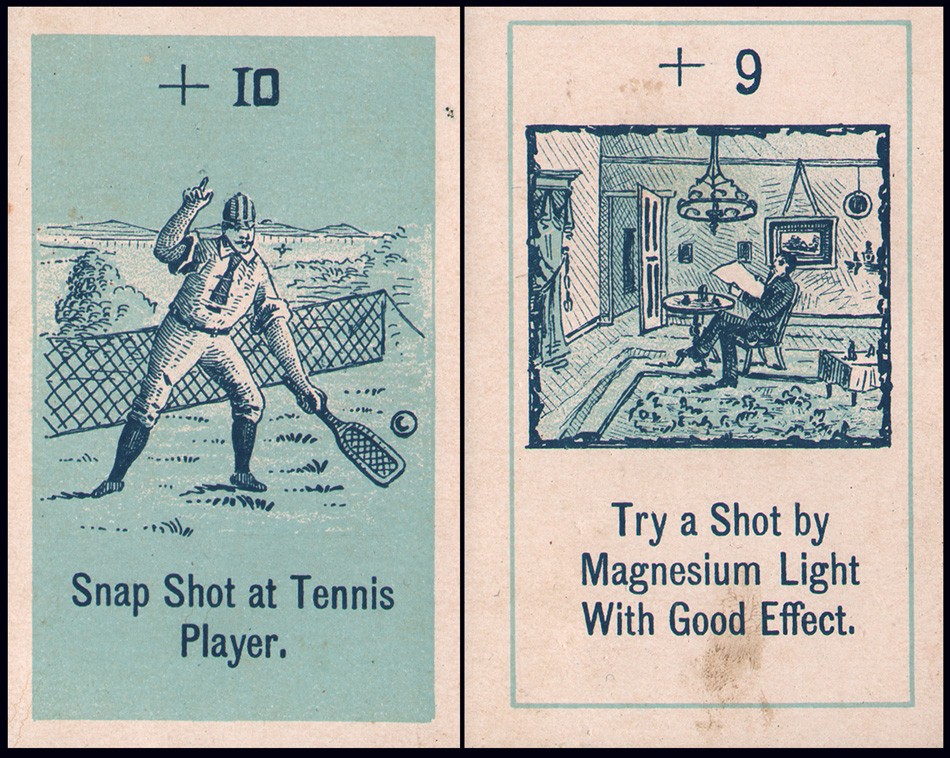
Left: “Snap Shot at Tennis Player” : Right: “Try a Shot by Magnesium Light With Good Effect”. 1889. Individual coated-paper lithographic playing cards measuring 8.9 x 5.6 cm (3.5 x 2.25”). Milton Bradley Company, Springfield, MA. The cards making up the game “The Amateur Photographer” were illustrated to show “the triumphs and “hard luck” of an amateur photographer in a way that no member of the craft can fail to appreciate”. These two high value cards reveal the very tricky technical goal of freezing sports action at left- something rarely attempted at the time- and at right, the undertaking of a so-called “flashlight” photograph. This was achieved on a photographic plate through the intense illumination given off during the ignition of flash powder made up of a mixture of nitrate and magnesium held off camera by the photographer. From: PhotoSeed Archive

One exception found online by this website is the 2016 Japanese card game  “Wind the Film!”, a half-frame camera photography themed card game for 2-4 players.