Featured Entries from the Photoseed Blog

New Additions
66 Entries

Heaven on Earth

Jul 2020 | New Additions, Significant Photographers, Significant Photographs

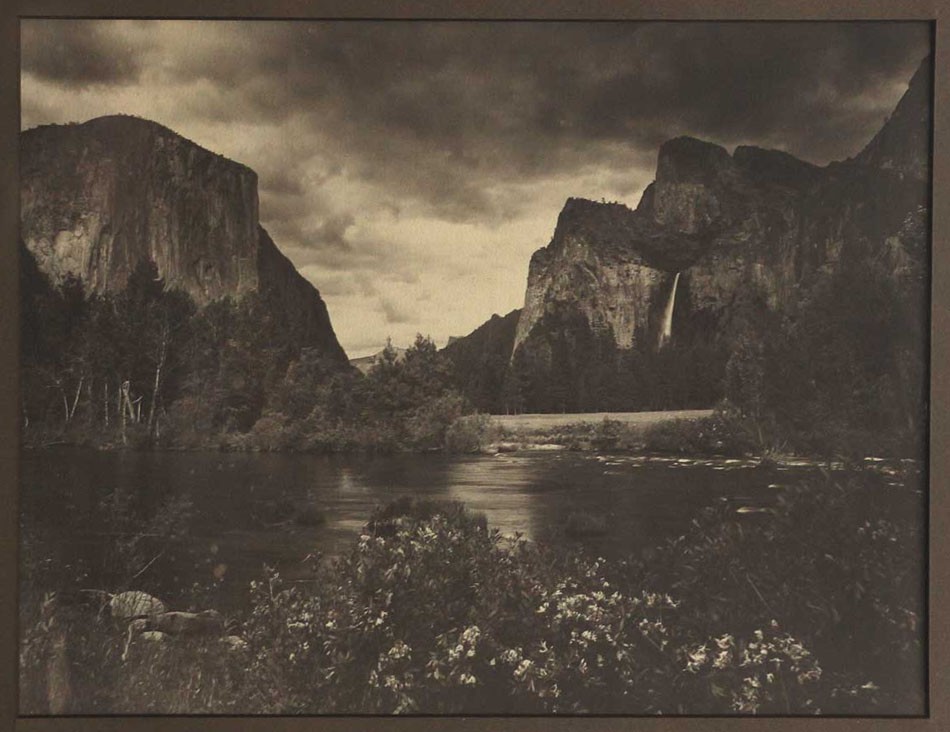
America’s birthday is best defined by the natural beauty of her National Parks, undisturbed by man’s folly.

“The Gates of Yosemite”: Arthur C. Pillsbury, American: 1870-1946. Vintage bromide print c. 1915-20 (from original negative c. 1906-10) Image: 26.4 x 34.1 | 27.2 x 35.0 cm. Support: original framing: 37.9 x 45.8 hardboard primary mount | frame: stained hardwood: 40.7 x 48.5 x 1.5 cm. From the 1914 volume Yosemite and its High Sierra by John H. Williams, the following passage is reproduced along with this photograph “The Gates of Yosemite”: “Soon, quitting the narrow, cluttered wildness of the lower river, the newcomer is face to face with the ordered peace and glory of Yosemite itself. Gratefully, silently, he breathes the very magic of the Enchanted Valley. For here, fully spread before him, is that combination of sylvan charm with stupendous natural phenomena which makes Yosemite unique among Earth’s great pictures. He sees the cañon’s level floor, telling of an ancient glacial lake that has given place to wide, grassy meadows; fields of glad mountain flowers; forests of many greens and lavenders; the fascination of the winding Merced, and, gleaming high above this world of gentle loveliness, the amazing gray face of El Capitan, while Pohono drops from a ‘hanging valley’ superbly sculptured, and so beautiful that he may well deem it the noblest setting Nature has given to any of her famous waterfalls.” From: PhotoSeed Archive

Earth Bowl

Apr 2020 | Color Photography, New Additions

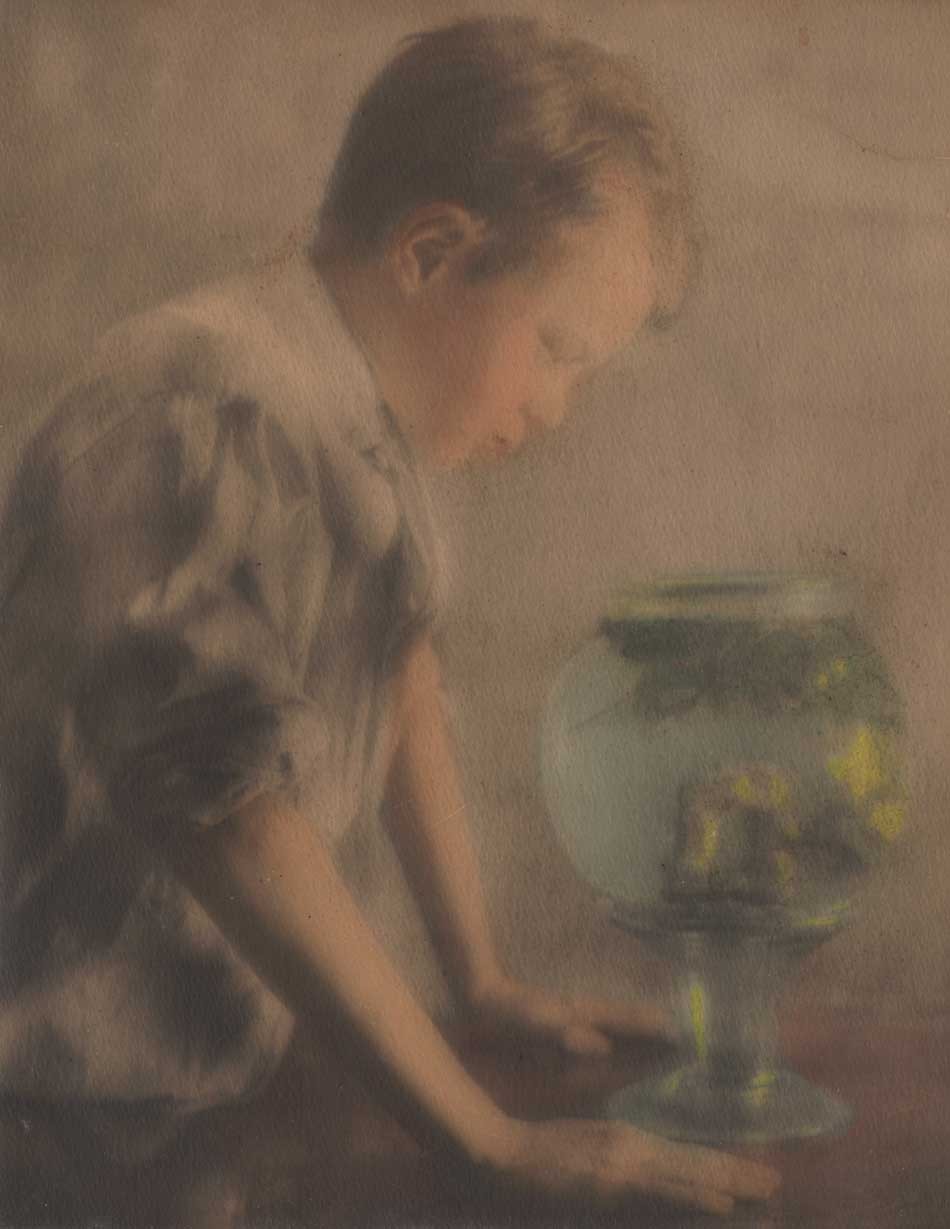
If for a moment we could look down and imagine our Earth fitting within a fish bowl, could we then realize the importance our fragile world depends on us all in feeding and caring for its’ survival? Please try. Today,  join us in celebrating 50 years of Earth Day.

“Child Gazing in Fish Bowl”: attributed to Arthur Hammond, American: born England: 1880-1962: hand-colored gelatin silver print mounted to album leaf, ca. 1910-1920: 23.8 x 18.5 | 25.0 x 32.7 cm. From a personal album of nearly 100 photographs attributed to Hammond dating from around 1910-1940. Born in London, Hammond arrived in America at Ellis Island on July 31, 1909 and quickly established his own studio in Natick Massachusetts by 1912-joining and exhibiting with the nearby Boston Camera Club. By 1920, he had authored the foundational book “Pictorial Composition in Photography” and became a leading voice for pictorialism in America through his position as associate editor of American Photography magazine that lasted 30 years from 1918-1949. From: PhotoSeed Archive

Old New York Strong

Apr 2020 | Documentary Photography, New Additions, Significant Photographers, Unknown Photographers

As New York City takes center stage for the role of viral epicenter it did not ask for, it has revealed a longstanding tenacity of spirit and resilience baked in- her very landmarks, monuments and memorials infused with the history of the shared past now standing silently yet propelling it ever forward. Combined with those higher graces of social inclusion and togetherness representing an ideal for American Democracy, these places and symbols will continue to forge and unite the connections between cultures, commerce and diasporas for the common good- in the days ahead and for the future.   -David Spencer

“Brooklyn Bridge”: Adolph A. Wittemann, American (1845-1938). Vintage Japan-tissue photogravure: 1889: printed ca. 1897-1900: Photogravure and Color Co. (New York): 8.8 x 17.1 | 12.6 x 19.7 cm | supports: 20.6 x 28.0 | 22.2 x 29.1 cm. Ferries and other marine craft navigate the East River in this pictorial view emphasizing the span of the famous bridge by Wittemann. Conversely, in a gelatin silver variant held by the Museum of the City of New York: “Looking over New York toward the Brooklyn Bridge”, (x2010.11.3891) the foreground frame shows a greater concentration of buildings and less river activity. In 1890,The Getty Research Institute’s Art & Architecture Thesaurus notes, Adolph Wittemann and his brother Herman would found The Albertype Company, a Brooklyn-based publisher employing the collotype (or albertype) photographic process. “The company operated from 1890 to 1952 and produced over 25,000 prints. The Albertype Company both produced their own photographs (Adolph was a photographer), as well as reproduced photographic images produced by other companies or individual photographers. Using the prints, the company published postcards and viewbooks. Viewbooks, also known as souvenir albums or view albums, are books that contain commercially published groups of photographs depicting a place, activity, or event.” From: PhotoSeed Archive

Detail: “Union Square”: unknown American photographer. Vintage Japan-tissue photogravure: ca. 1880-1900: printed ca. 1897-1900: Photogravure and Color Co. (New York): 10.8 x 16.4 | 14.5 x 18.8 cm | supports: 19.1 x 24.5 | 22.2 x 29.1 cm. Soldiers, possibly Cadets from the U.S. Military Academy at West Point, assemble in parade formation (Washington’s Birthday?) two abreast on the north side of Union Square in New York City. Everett House, a fine residential hotel that opened in 1853 at background center of photograph can be seen, and other clues might help a modern viewer more accurately date this view. They include an American flag flying at center, horse-drawn carriages at foreground left, a telegraph pole at foreground right and intact signs (upon close-magnification) on the building at far background left, directly behind the head of the line of soldiers. Located at 29 East 17th Street, it was the warehouse and shop for L. Marcotte & Co., a manufacturer and importer of fine carpets, furniture, and “looking glass plates, frames, gas fixtures, bronzes, and all articles of art”, according to an 1876 sales invoice, and is believed to have been at this location as early as 1860. From: PhotoSeed Archive

“Central Park” (Bethesda Terrace Steps): William Gray, American . (unknown dates but working c. 1880-1900) Vintage Japan-tissue photogravure: ca. 1885-1888: printed ca. 1897-1900: Photogravure and Color Co. (New York): 11.2 x 16.5 | 14.7 x 19.3 cm | supports: 19.8 x 25.3 | 22.2 x 29.1 cm. The Central Park Conservancy considers Bethesda Terrace- “the heart of Central Park and is, by design, its singular formal feature. Overlooking the Lake, it stands at the end of the Park’s long, tree-lined promenade known as the Mall. A grand staircase descends into the subterranean Arcade, which offers a welcome respite from rain and heat.” Shown in this photograph are the two flanking grand staircases for the terrace, designed by park architects Calvert Vaux with sculptural details by Jacob Wrey Mould.  Titled “Central Park-The Terrace and Grand Stairway”, this view first appeared in 1888 in the volume The Empire State: Its Industries and Wealth. (p.45) Later, it was included as part of a series of four architectural studies of Central Park bridges in the 1896 volume The Engineering Magazine, Vol. 11. (“The Terrace”: p. 863) The work was further published as “Terrace Steps, Central Park”- an offset color lithograph print souvenir inserted within the pages of The New York Recorder newspaper between 1891-96: see New York Public Library catalog ID (B-number): b17094307. From: PhotoSeed Archive

“City Hall Park, New York, March 2, 1896”: William H. Cooper, American. Vintage hand-pulled photogravure by the N.Y. Photogravure Co.: 18.0 x 22.9 | 27.6 x 34.8 cm. Plate issued with the March, 1896 Whole # 91 monthly issue of “Sun and Shade, An Artistic Periodical”. Snow from a late Winter storm coats trees and nearly everything else in New York City’s City Hall Park. From Wikipedia: “City Hall Park is a public park surrounding New York City Hall in the Civic Center of Manhattan. It was the town commons of the nascent city of New York… During the pre-Revolutionary and Revolutionary eras, City Hall Park was the site of many rallies and movements.” Photographer William H. Cooper was the President of the Department of Photography at the Brooklyn Institute of Arts and Science when this photograph was published. The editors of Sun and Shade commented on this work: “The present picture, taken it may be noted for technical readers, by a 2A Zeiss lens, is, without exception, one of the most remarkable productions, so far, which photography has produced. Every one who has seen the strange and peculiar aspect of leafless trees, when showered with fleecy snow, has longed to carry in his mind the memory of the pretty sight: but, until now, it is doubtful if such a weird aspect has ever been perpetuated; certainly not by the hand of a painter, for it would be far and away beyond any artist’s powers.” From: PhotoSeed Archive

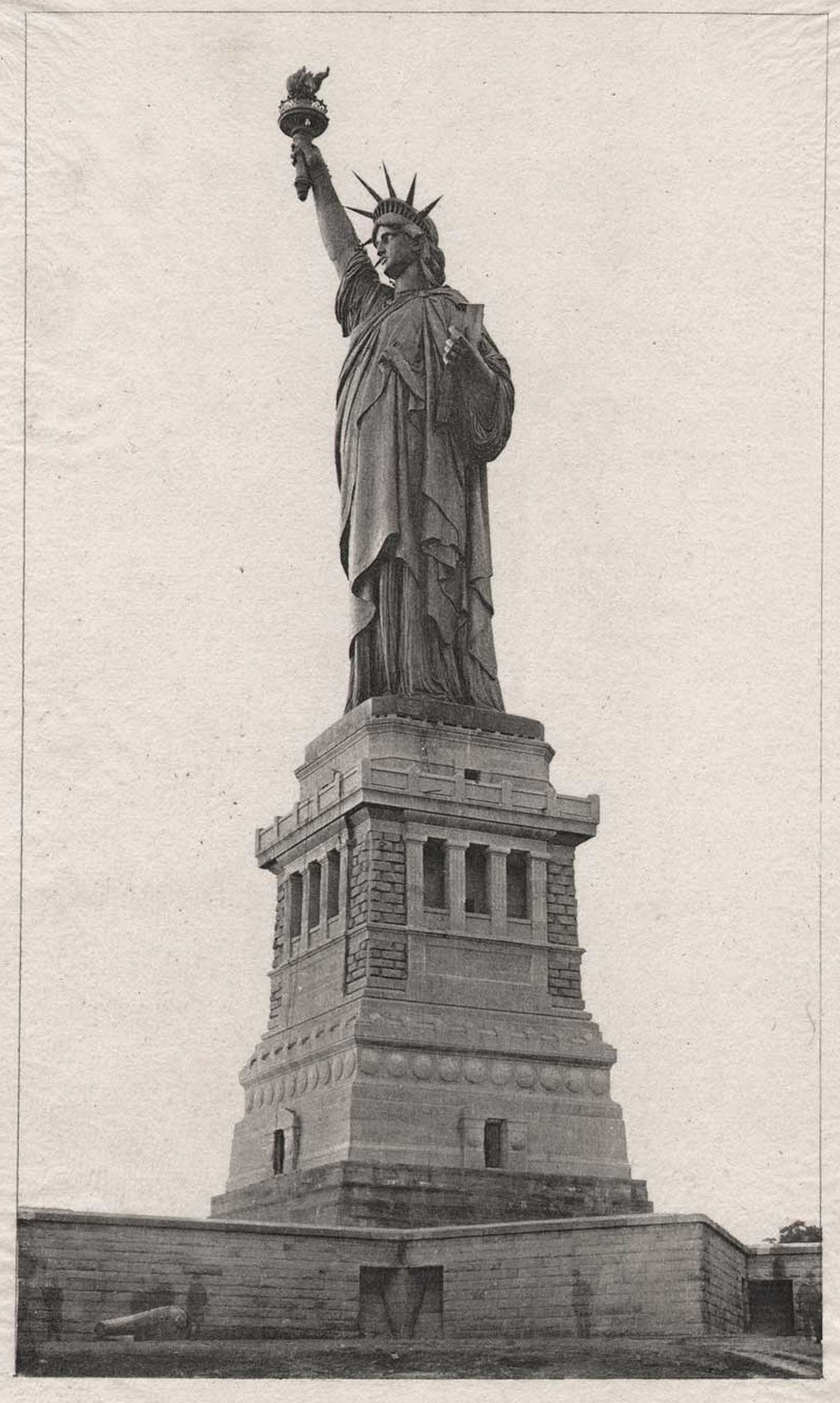
“Statue of Liberty”: Edward H. Hart, American photographer. Vintage Japan-tissue photogravure: 1886: printed ca. 1897-1900: Photogravure and Color Co. (New York): 17.2 x 10.1 | 20.9 x 12.5 cm | supports: 23.5 x 20.0 | 29.0 x 22.2 cm. This rare view of the Statue of Liberty (Liberty Enlightening the World) in New York Harbor was taken in the year it was officially dedicated, which took place October 28, 1886. E.H. Hart was a New York City based photographer with a studio at 1162 Broadway when contracted by the Photo-Gravure Co. of New York in 1886 to make several views of the statue. The company copyrighted one of these that year, titling it “Liberty”. A surviving example in the form of a mounted woodburytype process photograph is held by the National Archives at College Park in the U.S. state of Maryland. (Identifier: 45701938) This variant view by Hart includes the intriguing presence of six people who appear as “ghosts” at the base of the pedestal to the statue, their likeness due to movement during the long time-exposure required. The photographer billed himself an official U.S. Naval photographer, although it’s unclear if he was actually an employee of the Federal Government. A contract photographer for the Detroit Publishing Company in the late 19th Century, he was the author and publisher of the 1898 volume “The Authentic Photographic Views of the United States Navy”. From: PhotoSeed Archive

“Grant Memorial”: John S. Johnston, American photographer, born England or Ireland. (c.1839-1899). Vintage Japan-tissue photogravure: 1897: printed ca. 1897-1900: Photogravure and Color Co. (New York): 10.6 x 14.8 | 14.5 x 17.4 cm | supports: 19.5 x 24.5 | 22.2 x 29.0 cm. Taken in early 1897, this New York City view shows bicyclists on Riverside Drive with the soon to be opened General Grant National Memorial in the background. Known more commonly as Grant’s Tomb, it is located in the Morningside Heights neighborhood of Upper Manhattan. The massive domed mausoleum in the Neoclassical style is the final resting place for American Civil War General and 18th President of the United States Ulysses S. Grant. (1822-1885) Grant led the Union Army as Commanding General of the United States Army in winning the American Civil War. A close inspection of this photograph reveals ongoing work to the front stairwell area to the memorial, with large boards erected lengthwise against the base of the large columns. It was dedicated on April 27, 1897, the 75th-anniversary ceremony of Grant’s birth on April 27, 1822. A known variant giving credit to Johnston is held privately, along with another more frontal view of the memorial and one example believed to be this very image at The Library of Congress. The library holds approximately 750 dry plate glass negatives of yachts and other marine craft views taken by Johnston when he was a contract photographer for the Detroit Publishing Company. A New York Times obituary for the photographer noted he “made a specialty of scenic photography. He photographed most of the United States warships during the war with Spain. He also photographed all of the international yacht races during the past ten years.” From: PhotoSeed Archive

Window Gazing

Apr 2020 | New Additions

Patience – A Haiku

Premonition bound

A great, hopeful patience sleeps

beyond the window

 Apologies:  Poem Generator

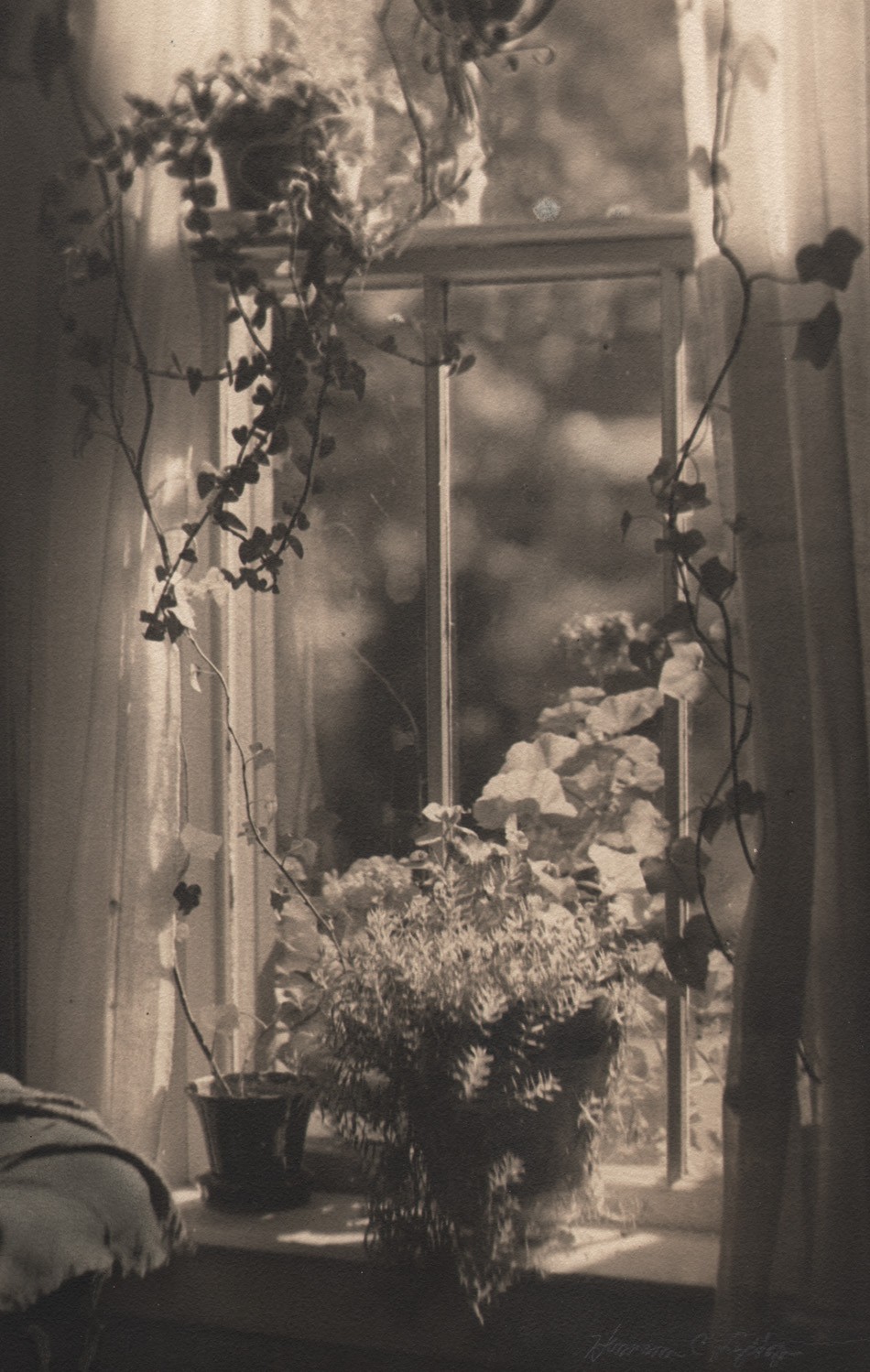
Detail: “The Winter Garden” Hermann Charles Lythgoe (1874-1962), American: vintage unmounted bromide print ca. 1920-40: (31.2 x 16.9 cm) Houseplants and flowers compete for sunlight on interior windowsills in this study by accomplished Boston-area amateur photographer Hermann Lythgoe. A chemist by training, he graduated from the Massachusetts Institute of Technology (MIT) in 1896 and went on to become the longtime Director for the Division of Food and Drugs at the Massachusetts Department of Public Health in Boston. From: PhotoSeed Archive

Photograph: Meet Frame

Feb 2020 | Conservation, Framing, New Additions, Photographic Preservation, PhotoSeed, Significant Photographers

Last August I had the uncommon opportunity to purchase five photographs ca. 1905-1910 that were still in their original picture frames taken by William T. Knox, (1863-1927) then president of the Brooklyn Camera Club.
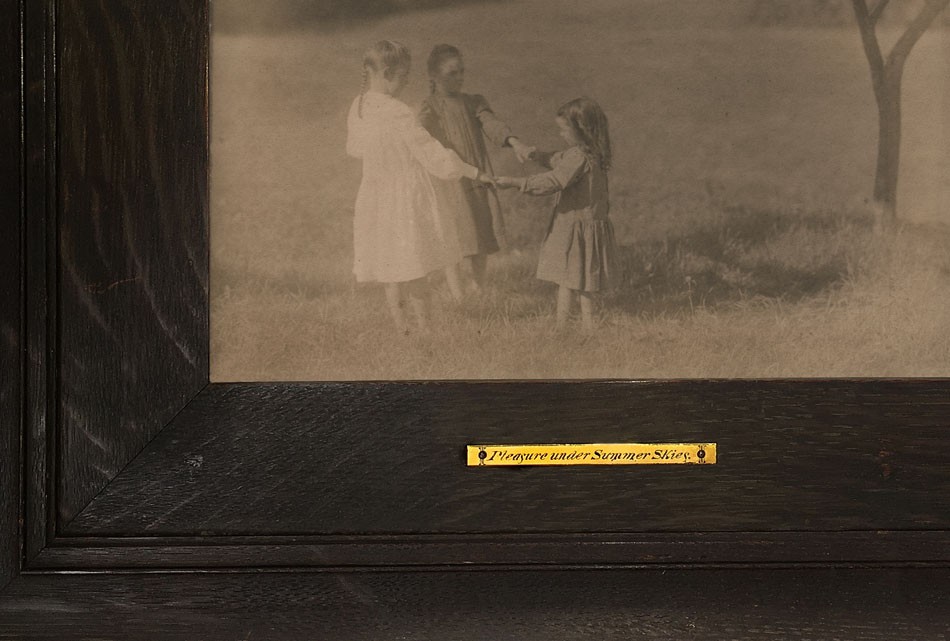
Detail: “Pleasure Under Summer Skies”: William T. Knox, American: (1863-1927) Vintage sepia Platinum print ca. 1905-10; 19.6 x 24.5 | 19.6 x 24.5 cm (flush-mounted on Bristol-board type matrix). Photograph framed in quarter-sawn oak frame with brass title nameplate made by James Engle Underhill, American: (1870-1914) two-piece integrated: 34.5 x 39.5 x 2.0 cm shown with glass removed. “Pleasure Under Summer Skies” dates to 1905, and was initially exhibited in the Second American Photographic Salon, overseen by the American Federation of Photographic Societies under President Curtis Bell. At the time, William Knox was Federation Secretary. From: PhotoSeed Archive

Additionally, three of them were in beautiful wood frames made by his fellow club member James E. Underhill, 1870-1914, who I discovered had made his living as a fine picture framer since around 1900 in New York City at his shop at 33 John Street, at the corner of Nassau Street.

Before limited conservation, the original James E. Underhill white-paper letterpress label in olive-green (2.9 x 2.0 | 4.3 x 3.2 cm) is seen affixed to the frame backing verso of his oak frame enclosing the William T. Knox photograph “Pleasure Under Summer Skies”. Conservation treatment by this archive carefully left this label in place. James Engle Underhill was a fellow member along with Knox at the Brooklyn Camera Club when this photograph was taken and framed. (ca. 1905-10) Underhill’s picture framing shop: “Jas.E.Underhill, 33 John St., New York City. MAKER PictureFrames.” was in operation at this location (corner Nassau) from around 1900 to his death in 1914. From: PhotoSeed Archive

In my 20+ years of collecting photography, and with a definite impression the “bloom is off the rose” when it comes to the intersection of internet commerce, it seems to me today more difficult to acquire vintage photographs of artistic note still in their original frames. This is a pity, because framed photographs left undisturbed from 100+ years ago can often reveal the more honest intent photographers wished for their work to be seen and appreciated- for the time they were created no doubt, but also on a higher aesthetic level.

Upper left: When first received by PhotoSeed after purchase in late August, 2019, the verso of the framed William T. Knox photograph “Pleasure Under Summer Skies” is seen in its’ original James E. Underhill oak frame. As was common in framed works from the late 19th and early 20th centuries, a thin sheet of pine wood veneer was used as a backing board, secured by small nails. Upper Right: Conservation treatment on the framed work included removal of this wood backing board along with rusted screw-eyes and wiring used for hanging as well as some of the frame backing paper. The original Underhill framing label is carefully left undisturbed at lower right and the Bristol-board type matrix with flush-mounted photograph on recto is revealed, showing the “burning in” of several wood knot holes from the recto of the original sheet of wood veneer. Next steps included the thorough cleaning of the original framing glass and then cutting a piece of acid-free, 4-ply mat board that would be sandwiched between the photographic matrix and new piece of cardboard backing board. Finally, a Fletcher brand framing gun was used to secure glass, mounted photograph and the two separate backing matrixes using new metal framer’s points to the inside perimeter of the frame verso. Lower Left: Tools at right including small pliers and a wire-cutter were used to remove the original verso framing nails from the William T. Knox photograph “Playmates”, along with an X-Acto knife at far right to cut away the delicate and very acidic backing paper. A unique paper label signed and titled by the artist in the middle of the paper was then carefully removed and preserved within a newly encapsulated frame using a piece of acid-free mat board. New flush-mounted hanging hardware (screw-eyes not recommended!) and braided wire were also installed. Lower Right: A selection shows vintage frames with photographs from the PhotoSeed Archive, including the William T. Knox photograph “Pleasure Under Summer Skies”, now re-installed within its’ original James E. Underhill frame at upper right. To the left of it is a separate frame made by Underhill’s contemporary, George F. Of Jr. (1876-1954) From: PhotoSeed Archive

On a technical note, PhotoSeed does minimum conservation on framed works when they enter the collection. The mantra of “do no harm” as well as the realization of being temporary custodians of an archive is embraced. When in doubt about proceeding with photographic conservation, advice given me many years ago from a George Eastman Museum conservator to basically just leave things alone when unsure of how to proceed is something I’ve always kept in mind. Of course, the financial realities of proper conservation standards will always be at the forefront for collectors, both private and institutional.
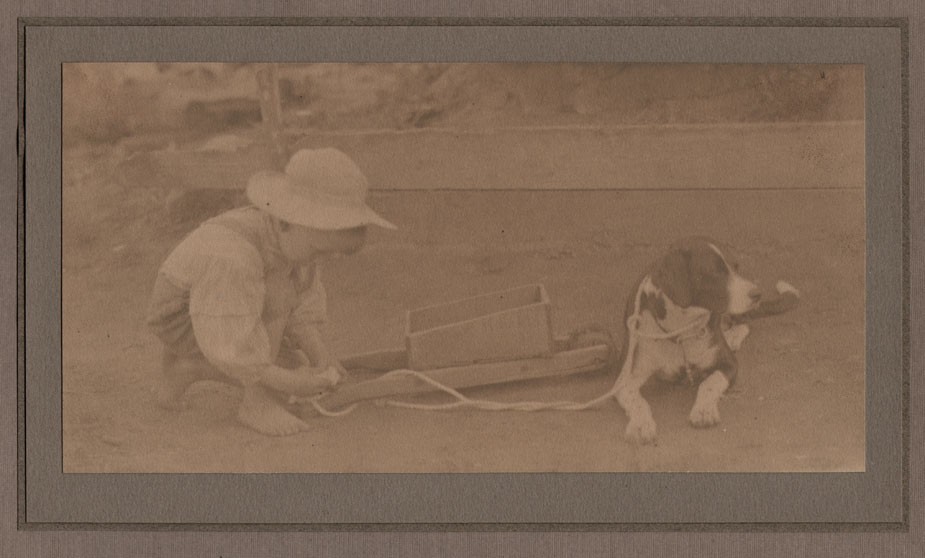
“Playmates”: William T. Knox, American: (1863-1927) Vintage sepia Platinum print ca. 1905-10; image: 12.0 x 23.5 mounted on fine art papers: 19.6 x 24.5 | 19.6 x 24.5 cm. This fine children’s genre study by Brooklyn Camera Club president William T. Knox dates to 1905 or slightly before as it was known to have been exhibited in the Second American Photographic Salon that year. It shows a young child attaching a leash from his faithful canine companion to his toy wooden wheelbarrow. From: PhotoSeed Archive

Frame Conservation: A Few Ideas

For framed works, conservation on my end typically includes the removal of acidic frame backing materials and replacement with acid-free mounting materials that come into direct contact with the physical print. Embedded dirt and other foreign matter is then carefully removed and or wiped away from the frame itself, with original finishes showing the passing of decades left deliberately intact and never stripped off. Finally, everything is put back together for storage or display: the original glass from the frame is also cleaned on both sides and then carefully put back into place. If cracks are discovered or worse, replacement with a custom cut piece of window glass will typically suffice.

Digital Presentation on PhotoSeed

For digital presentation on this website, the frame is then photographed separately and the print scanned. I use Photoshop to combine the two-leaving the original framing glass out. Purists may object to this but I’m not changing the physical object in any way-just taking advantage to present you with an optimum web experience. Of course, the joy of collecting is being able to appreciate a vintage photograph in the very best form possible: in person. Never the less, I’ve included a small photo along with three other conservation snaps in this post showing a small display of conserved and “reframed” works from this archive. Other examples can be found here.
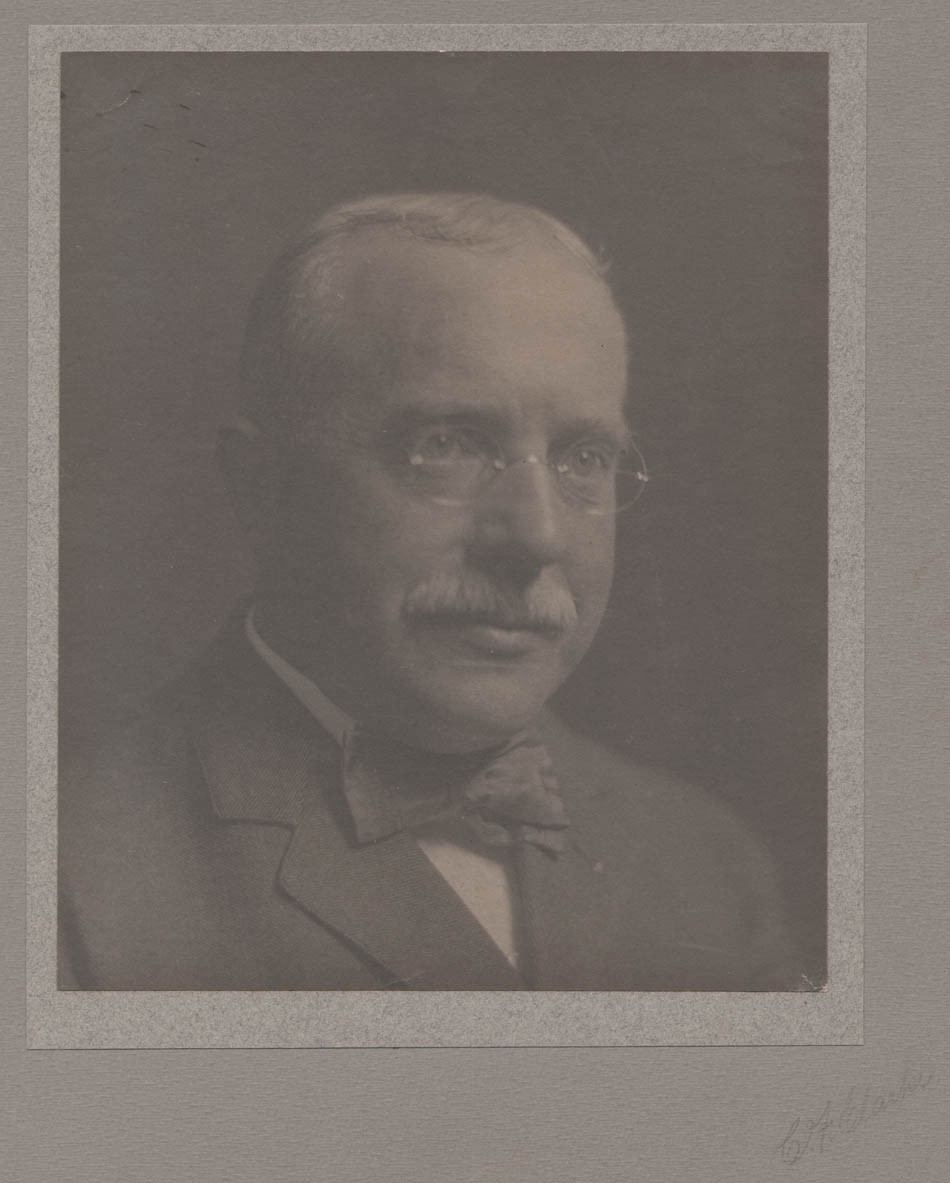
“Portrait: Brooklyn Camera Club President William T. Knox”: Charles Frederick Clarke, American, born Nova Scotia: (1865-1912) image: 21.7 x 17.8 cm; supports: light-gray art paper 23.7 x 19.4 | 36.4 x 29.5 cm; Vintage platinum print ca. 1905-10. William T. Knox (1863-1927) was an important American amateur photographer and promoter of photography from Brooklyn, New York. From at least 1891-1915, he was a partner of McCormick, Hubbs & Co., importers and commission merchants in West India and Florida Fruits and Produce with offices at 279 Washington Street in New York City. (Manhattan) From: PhotoSeed Archive

Intriguingly, I have owned a platinum portrait of William T. Knox, showing him to be quite the dapper gentleman- mustachioed, and sporting a bow tie taken about the same time he was club president, for many years prior to my collecting any of his actual photographs. This was  by Charles F. Clarke, 1865-1912, (American, born Nova Scotia) an amateur and business agent for the Forbes Lithograph Company of Springfield, MA.
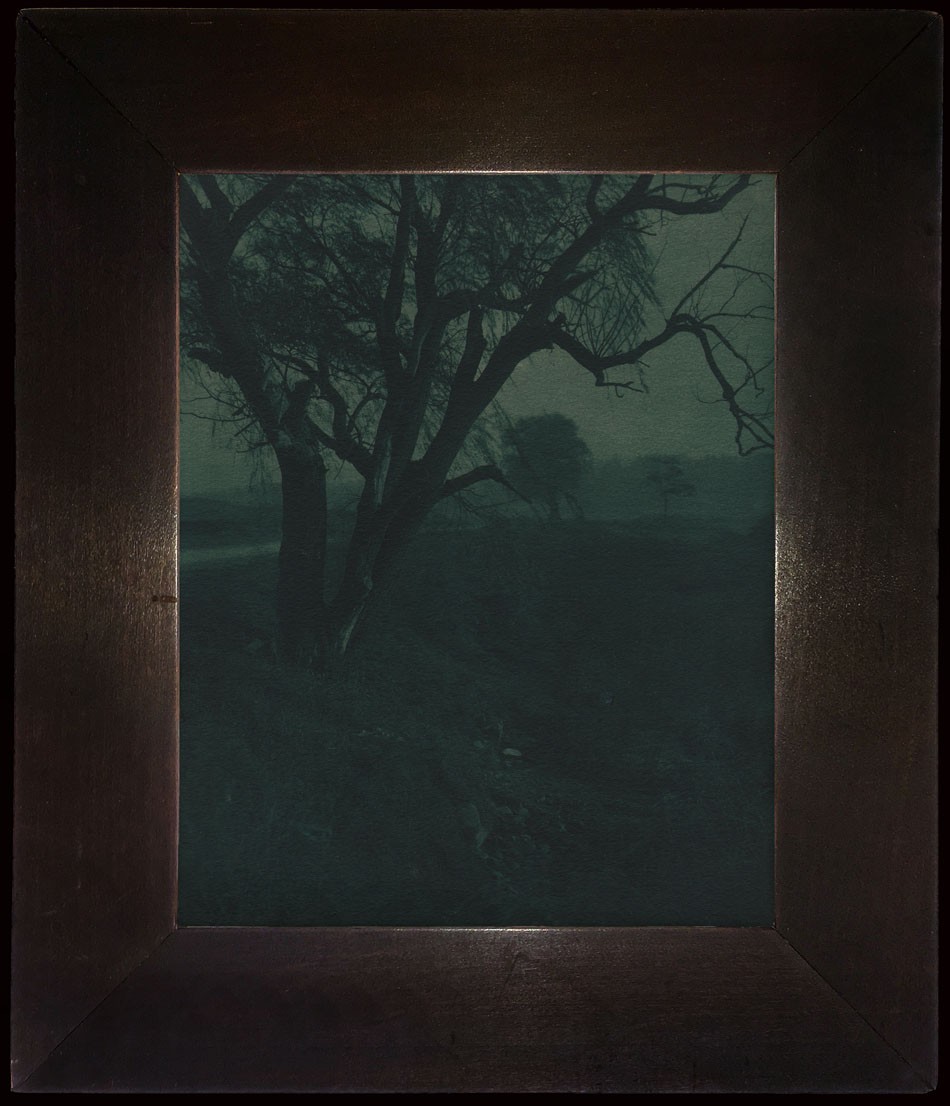
“Landscape in Green Carbon”: attributed to William T. Knox, American: (1863-1927) Vintage green Carbon print ca. 1905-10; image: 23.4 x 19.7 cm flush mounted to thick, Bristol-board type matrix: 23.6 x 19.7 cm shown within its’ original oak frame: 32.6 x 28.6 x 2.0 cm (with glass removed) by James E. Underhill (1870-1914) of New York City. Knox and Underhill were members of the Brooklyn Camera Club when this photograph was taken and framed. From: PhotoSeed Archive

You can see all of Mr. Knox’s framed works in the collection here, which includes a professional chronology for his friend the framer and fellow Brooklyn Camera Club member James E. Underhill.  Happy hunting!   -David Spencer
Blue Christmas

Dec 2019 | Alternate Processes, Color Photography, New Additions

 And when the blue snowflakes start falling

That’s when those blue memories start calling

You’ll be doing alright with your Christmas of white,

But I’ll have a blue blue Christmas   

“Christmas Night from an Attic Window”: Sigismund Blumann, American: (1872–1956). Vintage “Lithobrome” (Bromoil transfer) print ca. 1932 or later; 23.6 x 18.3 | 43.3 x 33.0 cm. Photographed from above through tree limbs supporting several inches of snow, this rare wintertime view by noted California pictorialist photographer Sigismund Blumann (1872–1956) shows a home courtyard with parked automobile seen through limbs at lower left. Most likely dating to the late 1920’s, this example printed 1932 or later due to Blumann’s inclusion of his F.R.P.S. affiliation (the year he earned Fellowship in the Royal Photographic Society) within the lower right corner of the primary matt’s impressed window. From: PhotoSeed Archive

   (lyrics by Billy Hayes & Jay W. Johnson made famous by Elvis Presley on his first Christmas album released in October, 1957)

1 3 4 5 6 7 11